Flake epoxy is the most versatile decorative floor you can put down, and 2026's color direction is clear: warmer, more complex blends are replacing plain cool gray. The standout looks this year are charcoal with a blue or steel accent chip for garages and warm earth-tone blends for basements and living spaces. The trick is matching the blend to the room, the light, and how forgiving you need the floor to be.
Flake floors have quietly become the default decorative finish for garages, basements, and hardworking living spaces — and it's easy to see why. They're durable, slip-resistant, endlessly customizable, and they hide dirt like nothing else. But the biggest question we get isn't whether to go flake. It's which color. Here's where flake design is headed in 2026, and how to pick a blend you'll still love in ten years.
01First, what "flake" actually is
Flake (sometimes called chip or broadcast) is a decorative floor built by scattering colored vinyl chips into a wet epoxy base coat, then sealing everything under a clear topcoat. The chips give the floor its speckled, stone-like look and a subtle texture that adds grip. Because the chips come in dozens of individual colors, your "color" is really a blend — a recipe of two, three, or even five chip tones mixed to taste. That's what makes flake so flexible compared to a solid coating.
02The 2026 shift: warm over cool
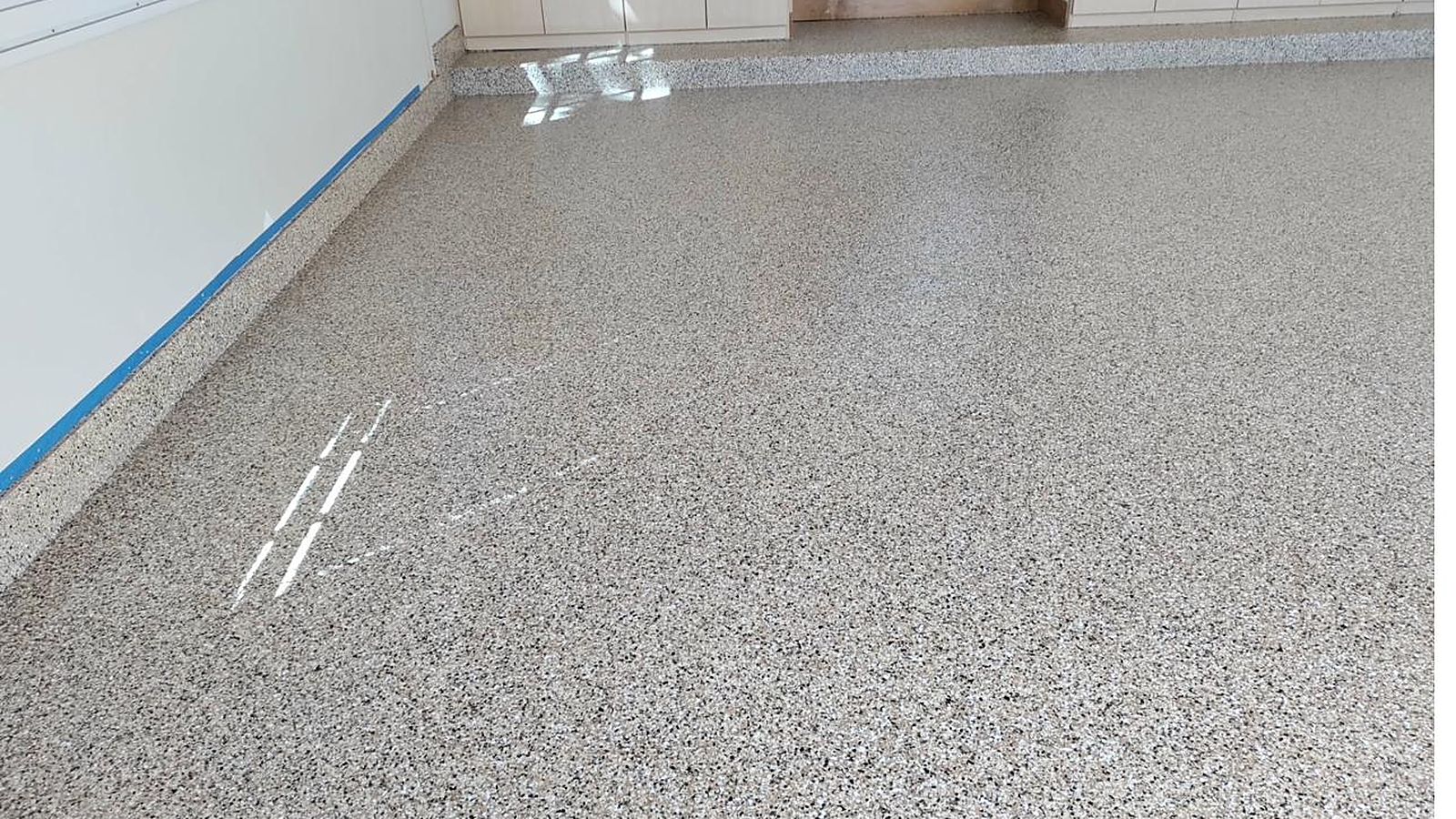
For years, cool silver-gray blends dominated. In 2026 the momentum has swung toward warmer neutrals — charcoal-champagne, greige, and sand tones that feel more inviting, especially in finished basements and living areas where homeowners want the floor to feel like part of the home, not a showroom. If you're torn between a cool gray and a warm neutral, the warm side is where design is heading.
03Trending blends worth stealing
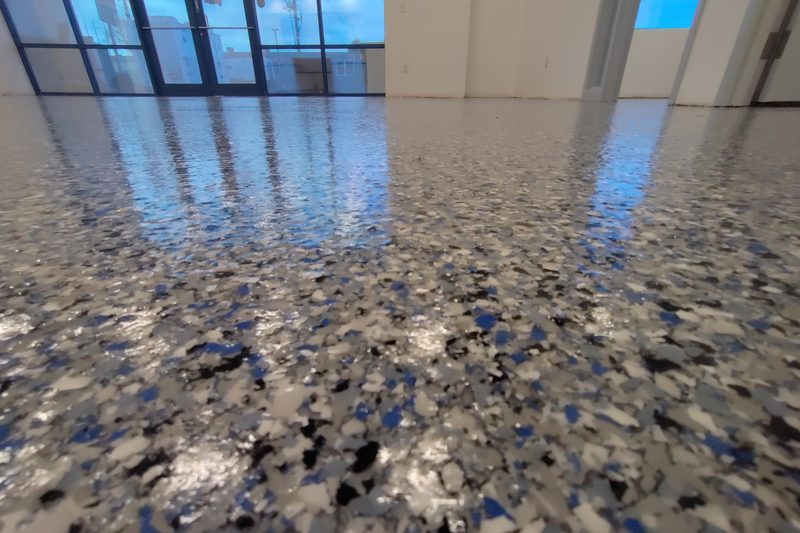
- Charcoal + blue accent. A deep charcoal base with a small percentage of blue or steel chips has become the new garage standard — modern, masculine, and it hides tire marks beautifully.
- Warm earth tones. Saddle tan, granite, autumn, and coastal blends bring warmth and read like natural stone. Ideal for basements, sunrooms, and open living spaces.
- Complex multi-chip mixes. The move is away from simple two-color blends toward 4- to 5-chip recipes that create depth and a natural, terrazzo-like effect.
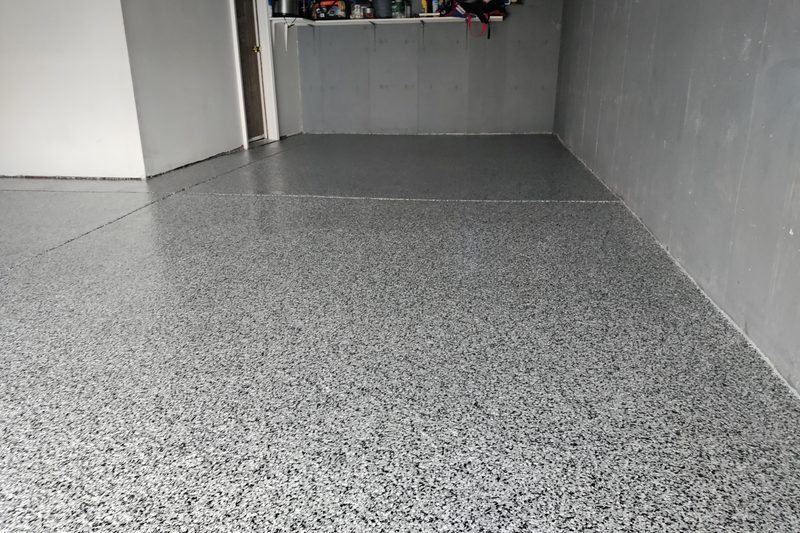
- Black & white "granite." A timeless high-contrast blend that never dates and pairs with any garage or shop.
Want to see real chips in your own light?
We'll bring flake samples to your space so you can compare blends against your walls and lighting before you commit. Free.
Book a Free Sample Visit04Match the blend to the room
The same chip blend can look completely different depending on the space. A few rules of thumb:
- Garages & shops: mid-tone and darker blends (charcoal, granite, earth) hide dust, oil, and tire marks best. This is where flake earns its keep.
- Basements & living areas: warm neutrals keep the space feeling bright and residential rather than industrial.
- Mudrooms, laundry & pet spaces: busy multi-chip blends camouflage everyday mess between cleanings.
05Flake density changes the whole look
Color isn't the only lever — how much flake goes down matters just as much. A partial (light) broadcast lets some of the base color show through for a subtler, more speckled look. A full broadcast covers the base completely for a rich, seamless, stone-like surface with maximum texture and grip. Full-broadcast floors also hide imperfections best, which is why they're the popular choice for garages. We'll walk you through the trade-offs when you pick your blend.
06Don't forget the topcoat
A beautiful blend is only as good as what seals it. In Colorado, a UV-stable clear topcoat keeps your colors from ambering under our intense high-altitude sun and adds the abrasion and chemical resistance that make a flake floor last. This is exactly the job a polyaspartic topcoat does best. Curious how flake stacks up against other decorative finishes? Our flake vs. metallic vs. solid color guide breaks it down.
07How to choose with confidence
Pick a base tone that fits the room's job, add an accent that ties into your walls or cabinets, and lean warmer if you're unsure. Then see it in person — chips look different under garage LEDs than under basement daylight. When you're ready, we'll bring samples, help you finalize a blend, and install it over a properly prepped slab for a floor that looks custom because it is. Get a free estimate to start.
Key Takeaways
- 2026's direction is warmer, more complex blends replacing plain cool gray.
- Charcoal with a blue accent leads for garages; warm earth tones lead for basements and living spaces.
- Match blend to the room — darker, busier mixes hide the most dirt and imperfections.
- Flake density (partial vs. full broadcast) changes the look as much as color, and a UV-stable topcoat protects your color under Colorado sun.