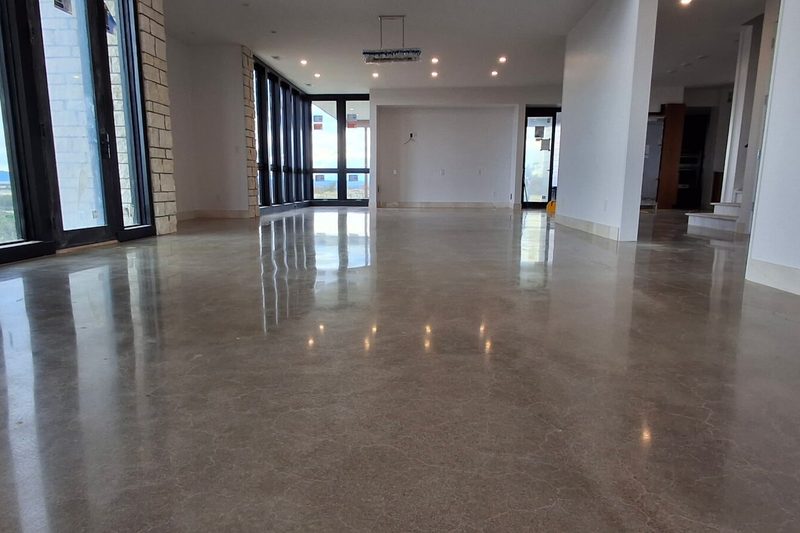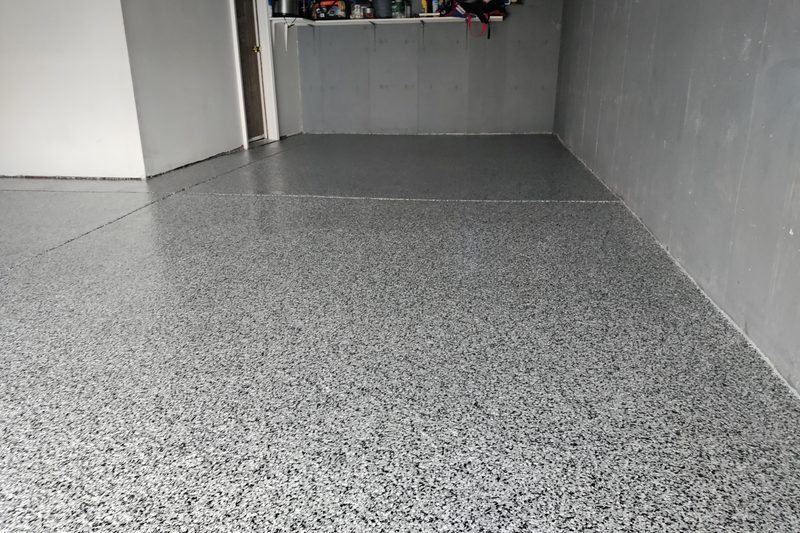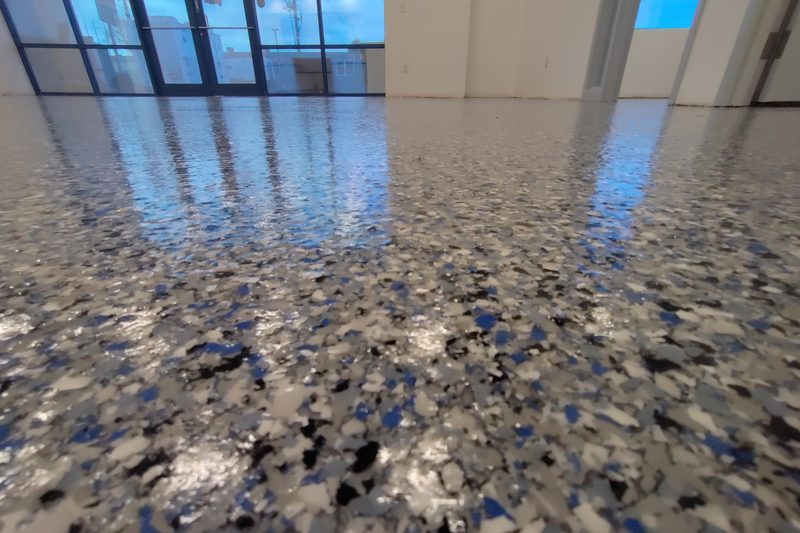
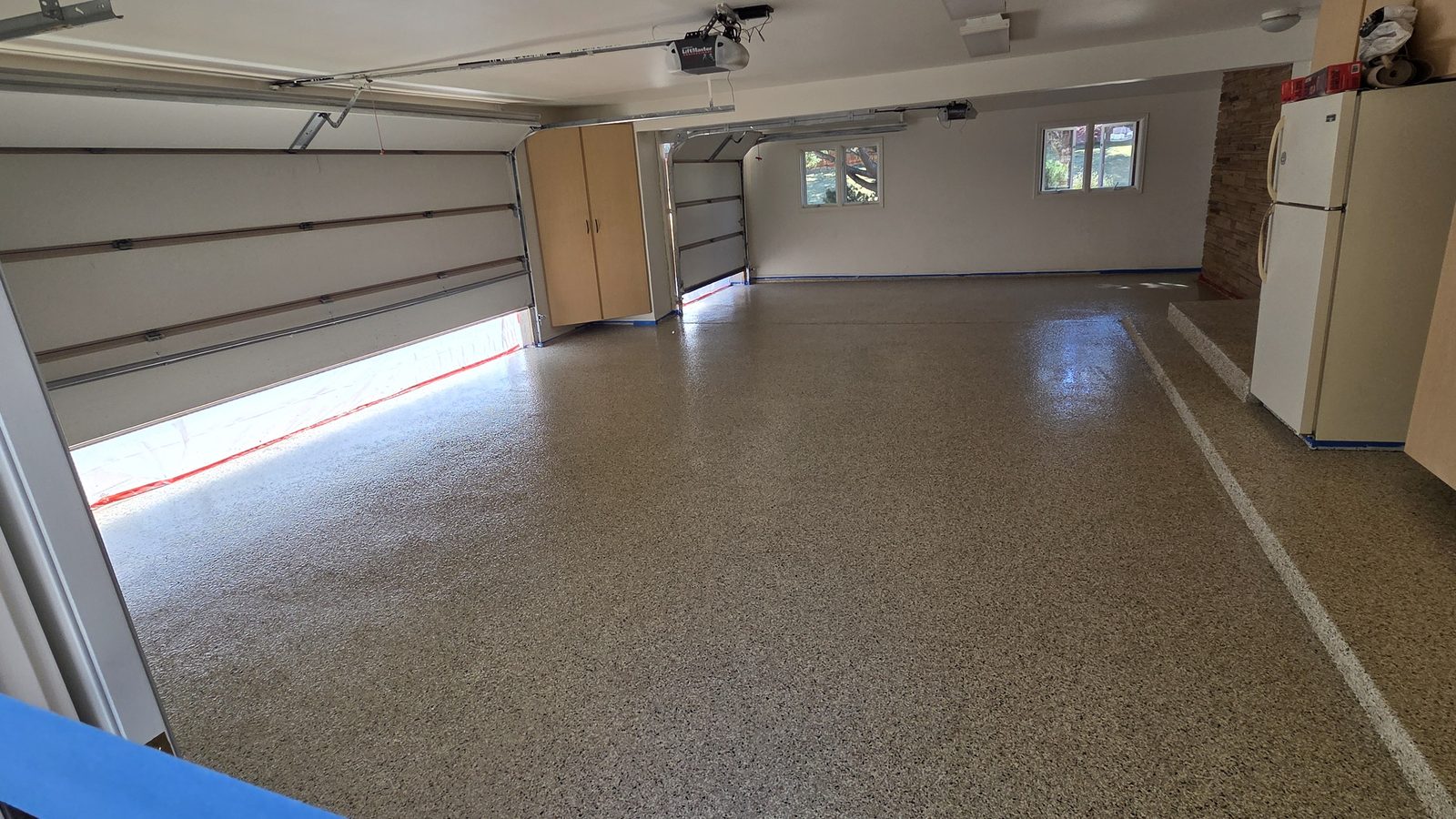
Hot tire pickup (or hot-tire lift) happens when warm tires soften a poorly-bonded garage coating and peel it off the slab as they cool and grip. It almost always comes down to bad surface prep or a low-quality coating — not the tires. The fix is prevention: mechanically grind the concrete to the right profile and install a quality 100%-solids epoxy, flake, or polyaspartic system that bonds to the slab and resists heat.
You pull your car in, park it, and weeks later there's a coating patch stuck to your tire and a bare spot on the floor. That's hot tire pickup — one of the most common (and preventable) garage-floor failures we see across the Front Range.
01What actually causes it
Tires heat up as you drive. When a hot tire sits on a garage coating, that heat softens the film slightly and the rubber plasticizers migrate into it. As the tire cools, it grips the softened coating. If the coating's bond to the concrete is weaker than the tire's grip, the tire wins — and lifts the coating right off.
The key insight: hot tire pickup is a symptom of a weak bond, not a tire problem. A properly bonded, heat-tolerant coating stays put no matter how hot your tires get.
02Why budget and DIY floors fail
- Skipped prep. Kits tell you to acid-etch or just clean the slab. Etching doesn't create the mechanical profile a coating needs. Without diamond grinding, the bond is fragile from day one.
- Thin, single-part "epoxy paint." Water-based or single-part coatings never fully cross-link, so they stay soft and peel easily.
- Moisture & contamination. Oil, sealers, and slab moisture left in place all sabotage adhesion.
- Rushed cure. Driving on a floor before it's fully cured invites early failure.
03Why Colorado garages are especially prone
Front Range garages take a beating. Big daily temperature swings, hot summer pavement, and freeze-thaw cycling all stress the coating-to-concrete bond. Road salt and magnesium chloride deicers tracked in over winter add chemical attack. A coating that might limp along in a mild climate gets exposed fast here.
Not sure which floor fits your space?
Our Colorado crews will walk your slab and give you honest options — free.
Book a Free On-Site Estimate04How professionals prevent it
- Mechanical prep. We diamond-grind (or shot-blast) the slab to an ideal concrete surface profile so the coating locks in mechanically, not just chemically.
- Moisture testing. If the slab is releasing too much vapor, we prime with a moisture-mitigation system first.
- Quality 100%-solids materials. Full-build epoxy, flake, and polyaspartic systems cure hard and stay bonded under heat.
- A tough topcoat. Polyaspartic and urethane topcoats add heat and abrasion resistance — exactly what a parked tire challenges.
- Proper cure time. We tell you when it's safe to walk and when it's safe to park.
05Already peeling? It's fixable
If your current floor is lifting, don't just re-coat over it — the new coating will fail too. The failed film has to be ground off, the slab re-profiled, and any moisture or contamination corrected before a new system goes down. That's exactly what our repair and restoration crews do. Watch for the other warning signs your floor needs recoating, and when you're ready, get a free estimate.
Key Takeaways
- Hot tire pickup is caused by a weak coating-to-concrete bond, not by your tires.
- DIY kits fail because acid etching and thin single-part paints don't bond well.
- Colorado's temperature swings, freeze-thaw, and deicers accelerate the failure.
- Diamond grinding plus a quality 100%-solids system with a tough topcoat prevents it.