
Commercial Floors
Medical Office and Clinic Flooring in Denver: Epoxy or Polished Concrete?
A zone-by-zone guide for practice owners, property managers and general contractors planning a clinic floor in the Denver metro.
Published
The short answer: most clinics do best with more than one floor. Densified polished concrete suits lobbies, waiting areas and corridors because it is easy to clean and looks clean and modern. Seamless epoxy suits exam rooms, labs, sinks and work zones where spills happen and cleanability matters most. Either way, the slab is prepped first, and the work can be scheduled around patient hours.
Choosing a clinic floor is less about one "best" product and more about matching each area to how it is used and cleaned. This guide walks through the main zones of a medical or dental office, what the CDC's environmental guidance says about floors, and what to ask before you sign off on a floor for a build-out or remodel.
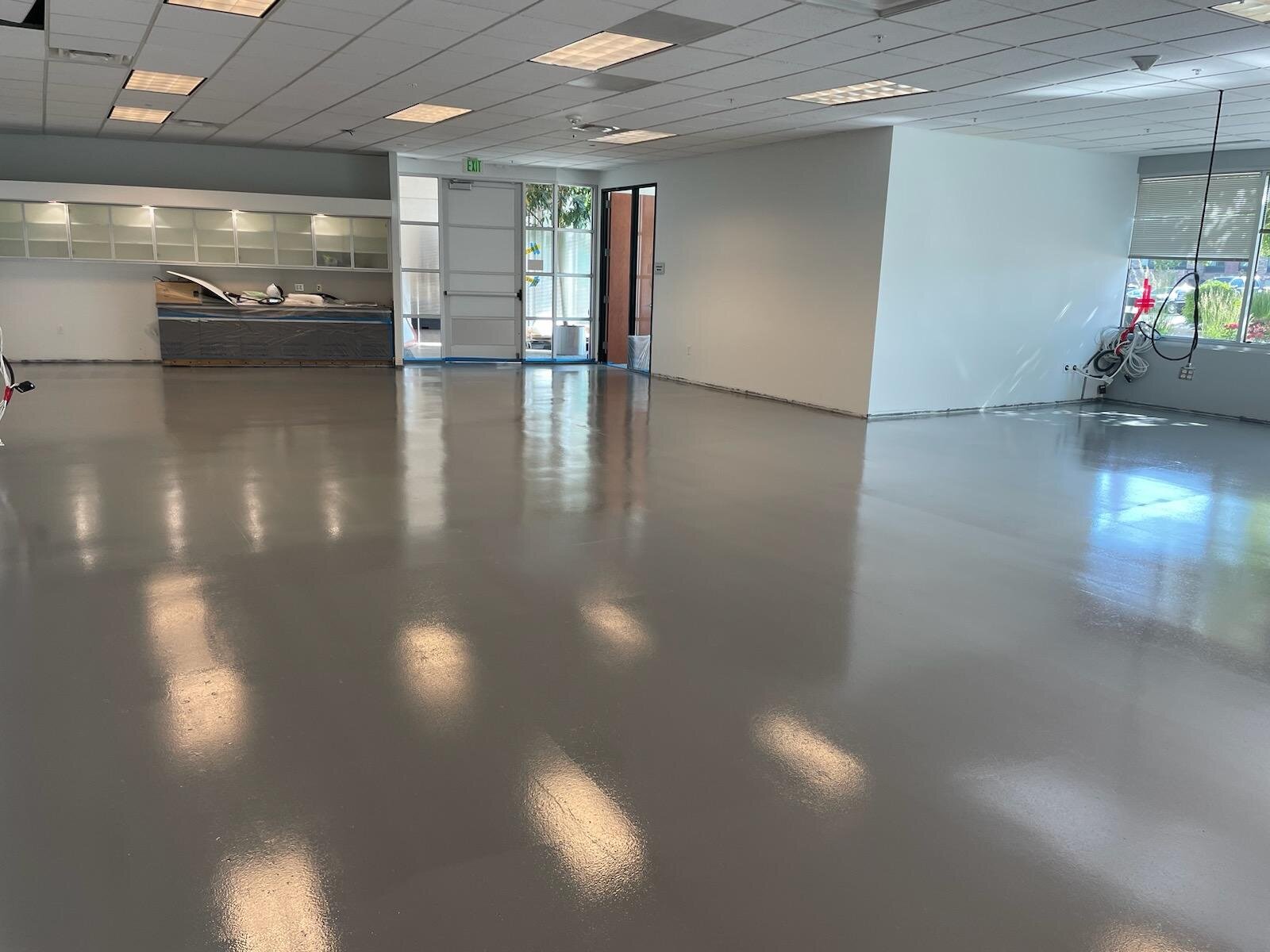
What does a clinic floor actually need to do?
The CDC's guidelines for environmental infection control group floors with walls and tabletops as housekeeping surfaces, and they say most housekeeping surfaces need regular cleaning with soap and water or a detergent/disinfectant, depending on the surface and the soil present (CDC, Environmental Services). The same guidance lists wet mopping and wet vacuuming among the methods for cleaning non-porous floors.
For a floor, that points to a few practical needs: a surface that stands up to frequent wet cleaning and the products your cleaning crew uses, as few seams and grout lines as possible, easy rolling for chairs and carts, and a finish that looks cared for. The CDC also notes that carpet is harder to keep clean after spills and harder to push wheeled equipment across, and calls avoiding carpet prudent where spills are likely, such as labs, areas around sinks and janitor closets.
Lobbies, waiting rooms and corridors: polished concrete
Densified polished concrete is a common choice for the public side of a practice. It is easy to clean, dust-free and gives a clean, modern look. Our auto and medical flooring page notes that many clinics and professional offices choose it for lobbies and corridors. Because it is the slab itself, ground, densified and polished, there is no coating to peel in high-traffic paths. Sheen and aggregate exposure can be chosen to fit the space; see polished concrete in Denver for the options.
Polished concrete needs a sound slab. Existing cracks, patches and old adhesive from carpet or tile all affect how it looks, so it is worth an on-site look before you commit.
Exam rooms, labs and work zones: seamless epoxy
Where spills and wet cleaning happen every day, a seamless resin floor is the usual fit. Epoxy forms a continuous, non-porous surface with no grout lines, which is why we describe it as ideal for medical offices, clinics and any space where hygiene matters. It also suits sterilization rooms, break rooms and restrooms, and it can be built with a texture where extra grip is needed. Our commercial epoxy flooring page covers the systems we install.
Ask whether the system's topcoat is rated for the cleaning and disinfecting products your practice uses. Your cleaning protocol, not the floor installer, sets which products go on the floor, so share the list during the estimate.
Dental and specialty offices
Dental and specialty practices often split the same way: a polished or decorative floor up front and a chemical-resistant, easy-clean coating in operatories, labs and sterilization areas. Floors can usually be matched in color so the transition looks intentional rather than patched.
Can the floor go in without closing the practice?
Usually, with planning. We schedule nights, early mornings or closed days so patient-facing areas stay open, and larger spaces can be done zone by zone. For a new build-out, the floor is typically scheduled with the general contractor after the messier trades are done. Tell us your patient hours and move-in date at the estimate so the schedule is built around them.
What should I ask before choosing a clinic floor?
- Which zones get which system, and why?
- How will the slab be prepped, and how are cracks, old adhesive and moisture handled?
- Is the topcoat compatible with our cleaning and disinfecting products?
- How will transitions between systems and other flooring be finished?
- Can the work happen nights, weekends or zone by zone?
- Can we see examples of finished commercial floors?
Planning a clinic floor in the Denver metro?
Visionary Floors installs polished concrete and commercial epoxy systems for medical offices, clinics, dental offices and professional spaces across the Front Range. We are fully insured, bring 10+ years of floor experience, and start every project with a free on-site estimate. If you are a practice owner, property manager or GC, we can walk the space and give you a zone-by-zone written scope. For more on commercial work, see our guide to Denver commercial floor codes.
Answers