
Diamond-Ground · Densified · Finished
Polished Concrete Denver | Commercial Polished Concrete Contractor
Visionary Floors is a polished concrete contractor based in Denver (6121 Washington St, Unit J), serving Aurora and the Front Range. We diamond-grind, densify and polish your existing slab to the sheen you choose, with no coating to peel, for warehouses, retail, offices, restaurants and homes.
Serving Denver and nearby cities: Denver · Aurora · Westminster · Arvada · Thornton · Lakewood
Updated
Our Work
Recent Polished Concrete Projects
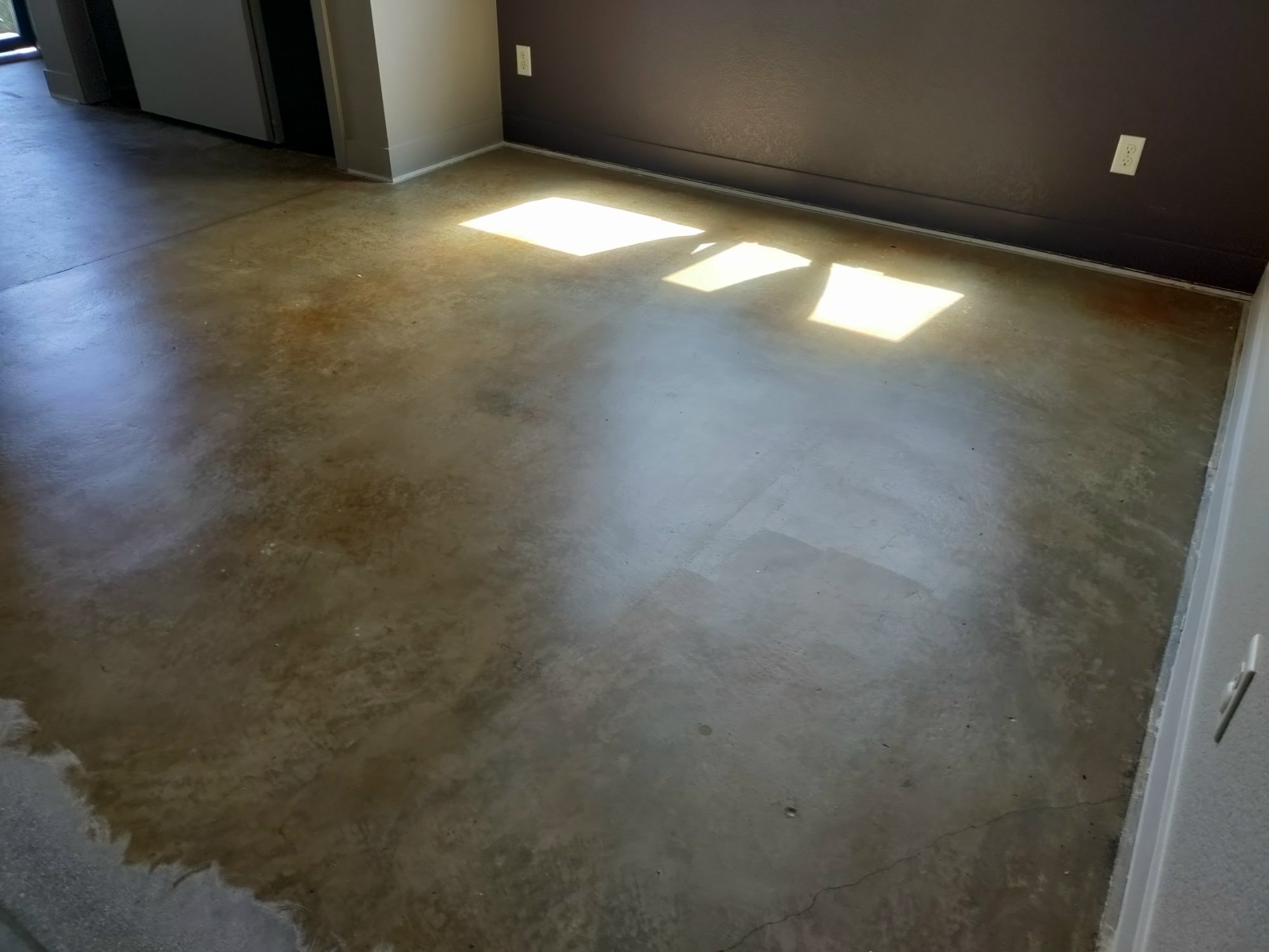
Real polished concrete floors we've designed and installed across Denver and the Front Range. Tap any photo to take a closer look.
What Is Polished Concrete?
Polished concrete is your existing slab, refined. Our crews grind the surface with progressively finer diamond abrasives, chemically densify it with a lithium or sodium silicate hardener, and polish it to the sheen you want — from a soft satin to a mirror-like gloss. There’s no coating to peel because the “floor” is the concrete itself.
The result is a dense, dust-proof surface that resists moisture, stains, and abrasion while reflecting light and looking sharp for 20+ years in high-traffic commercial settings.
Why Choose Polish
Benefits of Polished Concrete
The lowest lifetime cost floor for large commercial and modern residential spaces.
Decades of Durability
No coating film to wear through. Properly densified and polished slabs routinely last 20+ years under forklift and heavy foot traffic.
Lowest Lifecycle Cost
Uses the slab you already own. No material to buy, no periodic recoating. One of the lowest total costs of ownership of any commercial floor.
Light Reflectivity
A polished surface reflects overhead light, brightening the space and often allowing facilities to run fewer fixtures — real energy savings in warehouses and retail.
Dust-Proof Surface
Densification hardens the surface and stops concrete dusting — a major benefit for clean warehouses, food-adjacent spaces, and equipment longevity.
Low Maintenance
Daily upkeep is usually just dust mopping and occasional damp mopping with a neutral cleaner. No stripping, waxing, or recoating cycles.
Modern Aesthetic
Organic, minimalist look with soft reflections, exposed aggregate options, and stained accents. Perfect for retail, showrooms, and contemporary homes.
Aggregate Exposure Levels
Every slab has a thin layer of fine “cream” sitting on top of sand and stone. Diamond grinding removes that top layer in stages — the deeper we grind, the more aggregate (the natural stone cast into the concrete) we reveal. We pick the level with you because it changes the entire character of the floor.
- Class A – Cream: Original surface. Minimal grinding keeps a smooth, uniform finish with little to no stone showing.
- Class B – Salt & Pepper: A light grind exposes fine sand and small specks of aggregate for a subtle, speckled texture.
- Class C – Medium / Random: Grinding deeper reveals a mix of small and medium stones in a natural, random pattern.
- Class D – Full Aggregate: A deep grind fully exposes the large stone for a bold, terrazzo-like decorative look.
Slip resistance is measured by Dynamic Coefficient of Friction (DCOF). Properly finished polished concrete meets or exceeds the ANSI A137.1 wet-slip minimum of 0.42 across every gloss level and exposure class.
Where Polished Concrete Shines
Polished concrete is the preferred choice when you have a sound slab and want maximum durability with minimal upkeep:
- Retail & showrooms — bright, upscale, seamless floors that reflect product lighting.
- Warehouses & distribution centers — forklift-tough, dust-free, low-maintenance.
- Restaurants & breweries — excellent for dining rooms and taprooms (kitchens often pair better with seamless epoxy).
- Offices & medical facilities — clean, modern, easy to sanitize.
- Modern residential — open-concept living spaces, basements, and new construction.
If your slab is damaged, or you need specific colors, heavy chemical resistance, or maximum slip resistance, an epoxy or flake system may be the better call. We help you decide on every free estimate.
Polished Concrete in Aurora
We polish concrete across Aurora from our Denver shop, from Saddle Rock and Southlands to Central Park, Aurora Highlands and the industrial corridors along I-70 and E-470. See epoxy and polished concrete in Aurora and Southlands, or our Denver page if you're in the city.
Business & Home
Commercial vs Residential Polishing
Commercial
Warehouses, distribution centers, retail stores, showrooms and offices. We can work nights, weekends or phase the floor by zone. See warehouse and industrial flooring and retail and commercial flooring.
Residential
Open-concept living spaces, basements and new construction. See our residential polished concrete page, or read polished concrete floors for Denver homes.
Repair Before Polish
We assess every slab first. Cracks, spalling and surface damage are repaired before polishing, and if a slab is too far gone for a quality polish we'll recommend a coating or full restoration instead. See concrete slab, crack and spall repair. Every project is backed by our 1-year warranty.
How We Deliver
Our Polished Concrete Process
Assessment
We evaluate slab condition, moisture, and desired exposure level.
Diamond Grinding
Progressive grinding opens the surface and reveals the aggregate class you choose.
Densify & Polish
Chemical densifier hardens the surface; finer diamonds bring out the sheen.
Protect & Handover
Optional guard/conditioner applied; final walkthrough and care guide.
Learn More
Polished Concrete Guides
Straight answers to the questions we hear most on estimates.
Polished Concrete for Homes
Lofts, basements, and new builds: looks, comfort, cost, and timeline.
Polished Concrete vs LVP
Which floor lasts longer on a Colorado slab, and when vinyl makes sense.
Cleaning & Maintenance
A daily-to-yearly care schedule and the cleaners to avoid.
Polished Concrete vs Epoxy
Cost, durability, and which finish fits your space.
Answers
Polished Concrete FAQs
Straight answers from Colorado crews who polish floors every week.
Ready for a Floor That Lasts Decades?
Get a free, no-obligation estimate for polished concrete anywhere in Colorado. Your vision, our expertise.