
Comparison
Polished Concrete vs Luxury Vinyl Plank (LVP): Which Floor Lasts Longer in 2026?
A side-by-side look at durability, moisture, cost over time, and comfort for Colorado homes and commercial spaces.
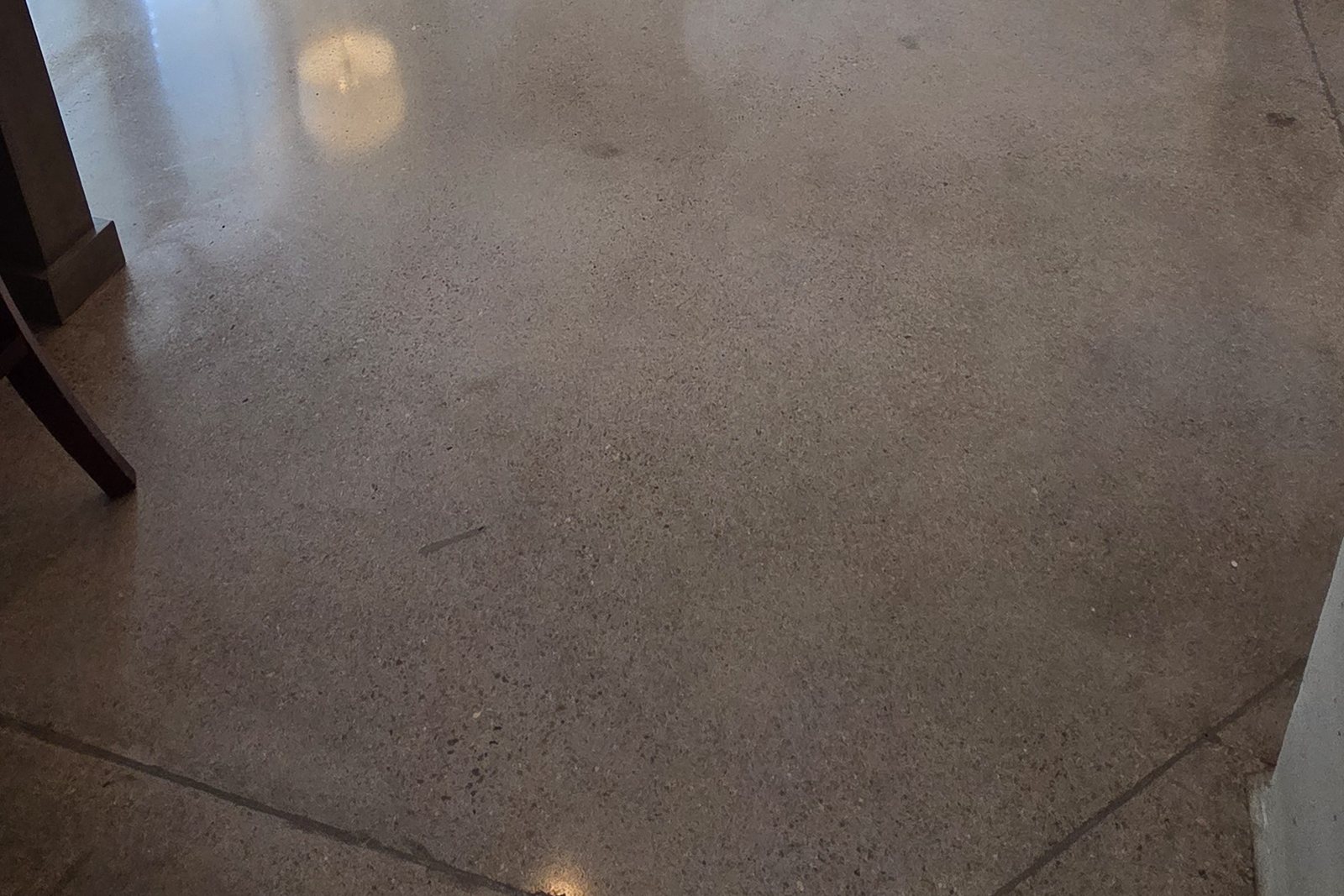
The short answer: on a sound concrete slab, polished concrete usually outlasts luxury vinyl plank (LVP) by decades. It's the slab itself, so there's no wear layer to scratch through, no seams to lift, and nothing to rip out and replace. LVP is the better pick when you want a softer, warmer surface, a wood look, or when you're covering a wood subfloor that can't be polished.
Side-by-side comparison
| Factor | Polished concrete | LVP |
|---|---|---|
| What it is | Your slab, ground, densified, and polished | Layered PVC planks installed over the slab |
| Typical lifespan | Decades on a sound slab | Roughly 10–20 years, depending on wear layer and traffic |
| Scratch resistance | Very high: hardened stone | Moderate: depends on wear-layer thickness |
| Slab moisture | Nothing to trap vapor; the slab can breathe | Needs a vapor barrier; moisture can collect under planks |
| Spills and pets | Surface wipes clean; no seams | Planks are waterproof, but liquid can reach seams and edges |
| Feel underfoot | Hard; pairs well with rugs and radiant heat | Slightly softer and warmer |
| Maintenance | Dust mop, neutral cleaner, periodic burnish | Sweep and mop; damaged planks must be replaced |
| End of life | Re-polish in place | Tear out and dispose, then buy new flooring |
Durability: wear layers vs solid stone
Everything protecting an LVP floor sits in a clear top wear layer that's typically 12–20 mil for residential products and thicker for commercial grades. Once grit, furniture, or pet claws wear through it, the printed pattern shows and the plank has to be replaced. Polished concrete has no top layer to lose. The densifier hardens the concrete itself, and if traffic lanes dull after years of use, the floor is re-honed and re-polished in place.
Moisture: the Colorado basement question
Concrete slabs on grade naturally pass some water vapor, and Front Range basements are the classic example. LVP is marketed as waterproof, and the planks themselves are. The risk is underneath them: without a good vapor barrier, moisture can collect between the slab and the flooring and lead to odors, mold, or adhesive failure. Polished concrete has nothing over the slab to trap vapor. We still test every basement before recommending a finish. See basement slab moisture in Denver for more.
Cost over time
Polished concrete typically runs about $5–$12 per square foot installed. LVP pricing swings widely with product grade, and quotes often leave out underlayment, vapor barrier, transitions, and floor leveling. On day one the two can be close. Over 20 years the difference grows: most LVP floors will need at least partial replacement in that time, while a polished floor needs routine cleaning and an occasional professional burnish. For commercial tenants, lifetime cost is why polished concrete is standard in so many Denver retail and office spaces (see retail and commercial flooring).
When LVP is the right call
We'll tell you if LVP makes more sense. It's the better fit on wood-framed floors, in rooms where you want a wood look or a softer feel, and on slabs too damaged to polish attractively. If your slab is damaged but you still want concrete, an epoxy coating or concrete repair may be the middle ground.
Related guides
Frequently Asked Questions
Deciding between polished concrete and LVP?
We'll look at your slab, test for moisture, and tell you honestly which floor fits the space. Free on-site estimates across the Denver metro.
Get a Free Estimate(720) 742-6691