
Residential Polished Concrete
Polishing the Concrete Under Your Carpet or Tile: What to Expect
Tack-strip holes, adhesive, cracks and patches: how the slab you uncover shapes a polished floor, and the safety check to do before anyone grinds.
Published
The short answer: often, yes. Concrete Network confirms that an existing concrete subfloor can be stained or polished once worn carpet, ceramic tile or sheet vinyl comes up. But the slab you uncover is a used floor, not a blank canvas. Tack-strip holes, adhesive, cracks and patches all shape the final look, and in older homes the old flooring and adhesive should be checked for asbestos before anyone grinds.
If you've been eyeing polished concrete for your home, this is the part between "rip out the carpet" and "enjoy the shine" that's worth understanding first.
First: check old flooring and adhesive for asbestos
Older floor tile and the mastic underneath it can contain asbestos. The EPA keeps a page of guidance on removing asbestos-containing floor tile and mastic. Its advice for homeowners is direct: don't sand or try to level asbestos flooring or its backing, don't sand, scrape or drill materials that may contain asbestos, and have removal done by people trained and qualified to handle it.
Colorado has its own rules. According to the Colorado Department of Public Health and Environment, if a renovation will disturb more than the trigger levels, those materials must be inspected by a Colorado-certified Asbestos Building Inspector before work starts, or assumed to contain asbestos. For single-family homes, the trigger for surfaces like flooring is 32 square feet. CDPHE also notes that buildings of any age may contain asbestos-containing materials. Sort this out before demolition day.
What you'll find when the carpet comes up
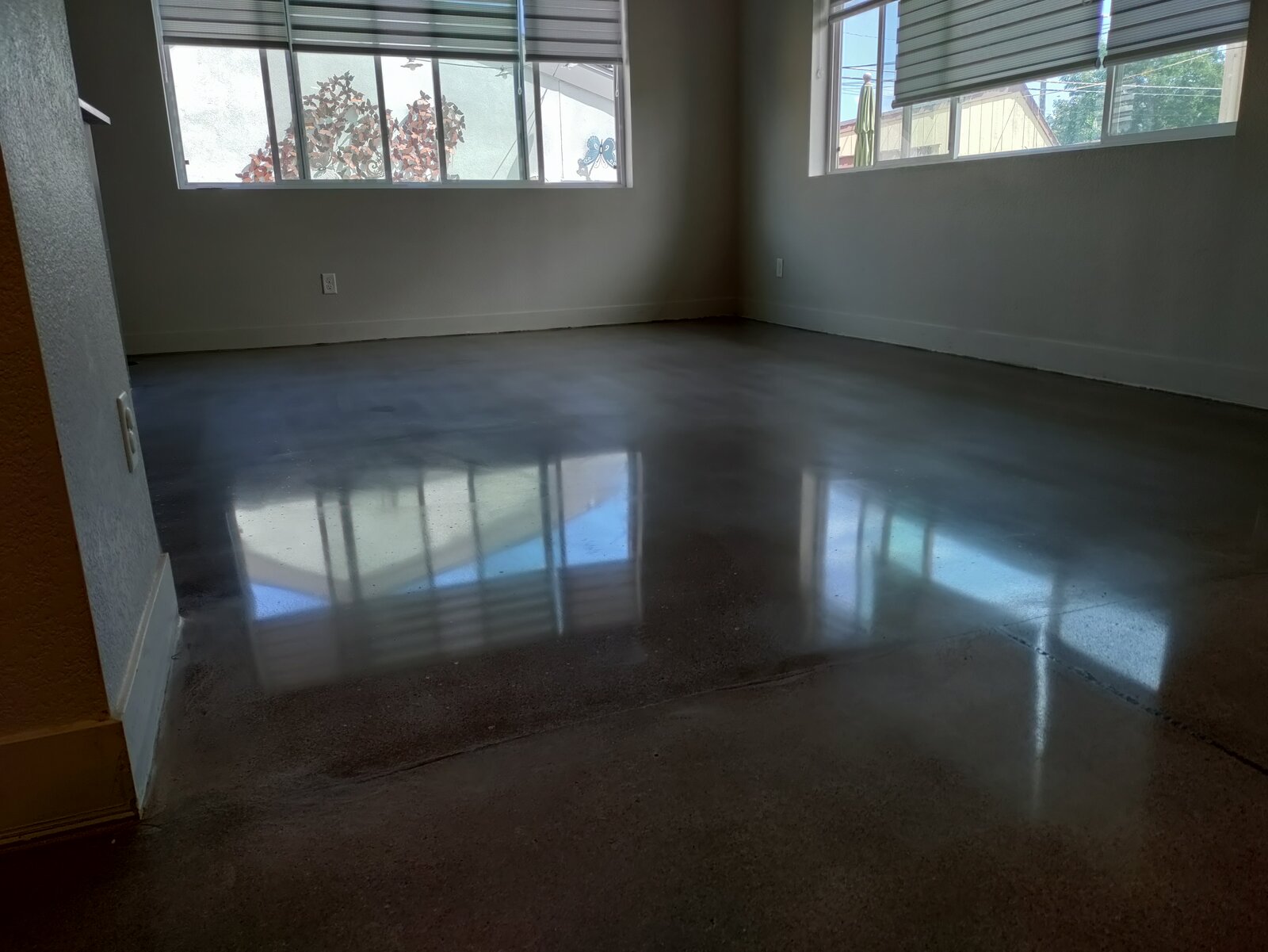
Concrete Network calls switching to decorative concrete "a big undertaking." The old flooring has to be pulled up and hauled away, any adhesive has to come off, and you may find tack-strip holes or cracks that need patching.
Around the edges of a carpeted room you'll usually see a ring of small holes and chips where the tack strip was nailed down. Concrete Network's polishing prep guide says these chips, small divots and spalls are typically filled with cement-based patching compounds before polishing, and adds a caution: "even the best patch may not be an identical match to the rest of the polished floor."
Adhesive, thinset and mastic
Glue and thinset left behind by tile or vinyl have to come off before the concrete can be polished. Concrete Network's prep guide says the quickest way to remove mastic or adhesive is to grind it off rather than use a chemical stripper. For large areas of vinyl tile, it describes ride-on machines built to scrape tile, adhesives, thinset and old coatings off the slab. The asbestos question above comes first, before any of that adhesive is ground or scraped.
Going the other way is just as involved. Our polished concrete vs LVP comparison covers why glued flooring has to be removed and its adhesive ground off before a slab can be polished.
Cracks: which ones matter
Most slabs have some cracking. Concrete Network's guide separates two kinds:
- Static (craze) cracks are hairline cracks that only affect the surface. They generally need little if any attention and can even add decorative interest once the floor is polished.
- Moving (active) cracks are more serious. They're typically routed out, cleaned and filled before polishing, often with a semi-rigid polyurea that can be color-matched to the floor.
If the slab has bigger problems, such as uneven or lifting sections, that's a separate conversation. See signs your concrete floor needs repair and concrete repair.
Patches and color: set realistic expectations
This is where an uncovered slab differs most from new concrete. Repair material maker Metzger/McGuire says even well-matched fillers "do not typically have the ability to make joints, cracks or other surface defects 'disappear,'" and may show differences in gloss compared with the rest of a highly polished floor. For an existing floor that won't be stained or dyed, it suggests lightly grinding a small area and wetting it to get an idea of what the finished concrete might look like.
In other words, a polished floor over an old slab tells the story of that slab. Many people like that character. If you want a perfectly uniform color instead, compare options in polished concrete vs epoxy, or see how sheen and aggregate change the look on our polished concrete page.
Before you pull anything up
- Find out what's under there. Peel back a corner of carpet in a closet, or look at a transition strip, to see whether there's tile, vinyl or adhesive on the slab.
- Deal with asbestos first. If you'll disturb more than Colorado's trigger level, the CDPHE inspection requirement applies. Either way, don't sand or scrape suspect flooring yourself (EPA).
- Expect patches to show. Tack-strip holes and repairs can be filled and blended, but they may not disappear completely.
- Ask for a test area. A small ground and wetted spot gives a rough idea of the color and character underneath (Metzger/McGuire).
- Plan the care. A polished floor is easy to live with. See how to clean and maintain polished concrete.
Thinking about trading carpet or tile for polished concrete at home? Request a free estimate and we'll take a look at your slab.
Sources
- Concrete Network: Replace Carpet and Tile with Concrete Floors
- Concrete Network: Polished Concrete Preparation
- Metzger/McGuire technical advisory: Color Matching Joint Fillers and Repair Materials in Stained/Polished Concrete Floors
- US EPA: Protect Your Family from Exposures to Asbestos
- US EPA: How EPA's Asbestos Regulations Apply to Floor Tiles and Mastic
- Colorado Department of Public Health and Environment: Asbestos support and guidance (renovation, demolition, certification)
Answers