
Homes · Basements · Lofts
Residential Polished Concrete Floors in Denver
Residential polished concrete turns the slab you already have into a finished floor. We diamond-grind it, harden it with a densifier and polish it to the sheen you choose, from soft satin to high gloss. There is no coating to peel, and day-to-day care is a dust mop and a damp mop.
Published
Where polished concrete works in a home
The short answer: anywhere you have a sound concrete slab and want a durable, modern floor without adding a layer on top.
- Basements. A polished slab has no film for moisture to push off, which makes it a strong option for lower levels. We still test moisture first. See basement floor coatings if you would rather have color or flake.
- Lofts and converted spaces. Structural slabs in lofts often polish beautifully once old adhesives and finishes are ground away.
- Main floors on a slab. Many modern homes and remodels are built on slab, and polished concrete pairs well with radiant floor heat.
- Under old carpet or tile. Sometimes the best floor is already there. Read can you polish the concrete under carpet or tile?
- Home gyms, studios and shops. Densified concrete is hard-wearing and easy to clean.
How we polish a residential slab
- Assess the slab. We look at cracks, patches, toppings, old adhesives and moisture during the free on-site estimate and tell you honestly how the finished floor is likely to look.
- Diamond grinding. Progressive grinding removes coatings and glue and opens the surface. How deep we grind decides how much aggregate shows, from a cream finish with little stone to a full-aggregate, terrazzo-like look.
- Densify. A lithium or sodium silicate densifier hardens the surface and stops concrete dusting.
- Polish. Finer diamonds bring the floor up to the sheen you pick.
- Protect and hand over. An optional guard or conditioner goes on at the end, with a care guide and final walkthrough.
Full details on aggregate classes and sheen levels are on our main polished concrete page, which also covers commercial work.
What to expect from a polished home floor
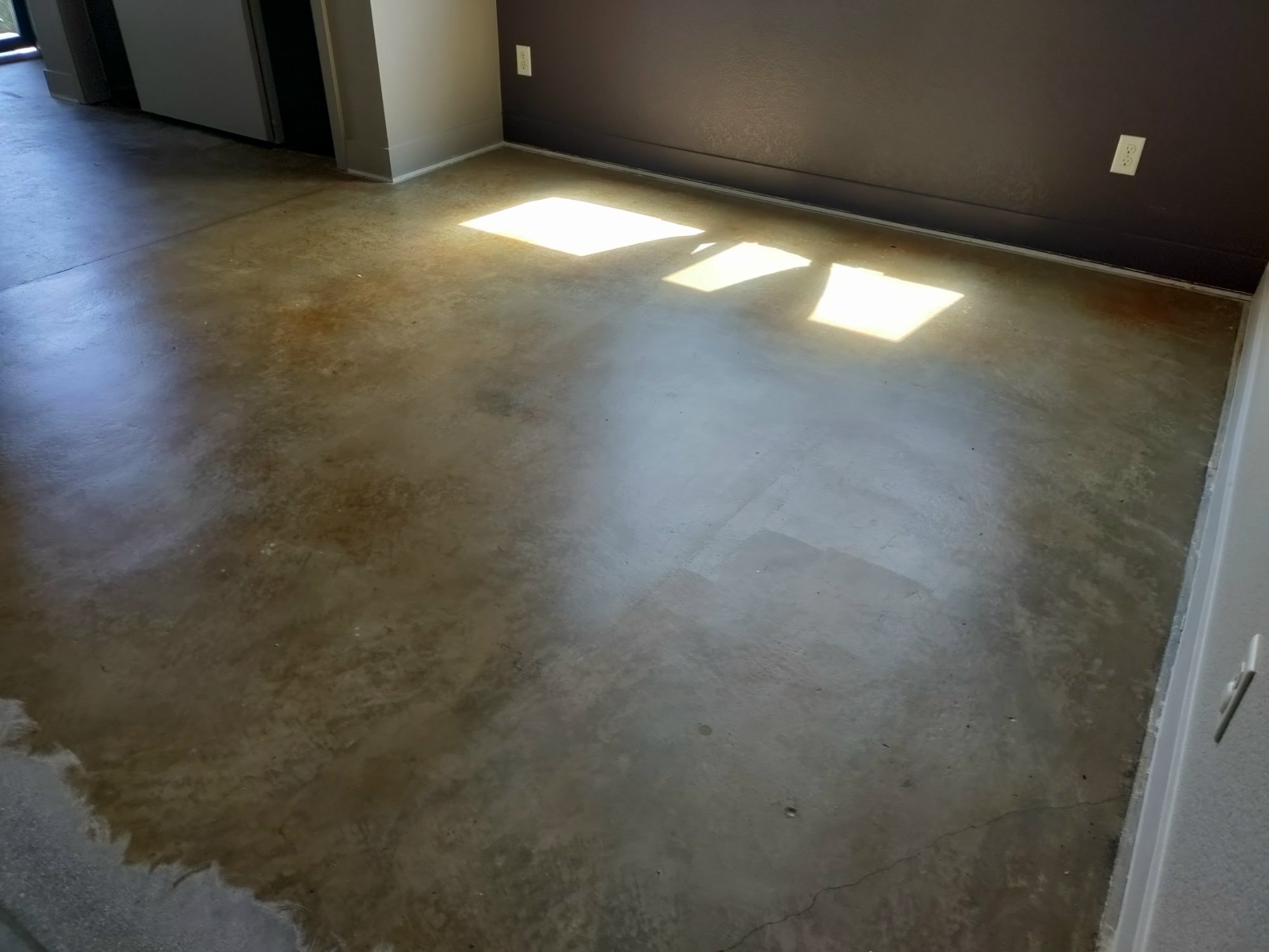
Polished concrete is concrete, and it keeps its character. Existing cracks, patches and color variation usually remain visible; many homeowners like that, and we can fill cracks to make them less prominent. It feels cool underfoot until the room warms it, and rugs soften living areas.
Care is simple: dust-mop grit, damp-mop with a neutral cleaner, and wipe up acidic spills. A professional burnish and re-guard every few years keeps the sheen bright. More in our polished concrete care guide.
Comparing options? Read polished concrete floors for Denver homes, polished concrete vs LVP and polished concrete vs epoxy.
Our Work
From Our Portfolio
Examples of floors from our project gallery. Tap any photo to take a closer look.
Answers
Residential Polished Concrete FAQs
Ready for a Polished Concrete Floor at Home?
Free on-site estimates across the Denver metro. 1-year warranty on every install.