
Basement Floors
Flake Epoxy or Polished Concrete for Your Basement Floor? How to Choose
Both can work in a Colorado basement. The slab's moisture, its flaws and how you use the room decide which one fits.
Published
The short answer: both can be a great basement floor, and neither is better everywhere. Polished concrete refines the slab you already have, so there's no coating to wear off or peel (Concrete Network). A flake epoxy system adds color, texture and a seamless look, and it hides more of the slab's flaws. The right pick depends on what your slab's moisture readings show, what shape the concrete is in and how you use the room.
Start with the slab, not the finish
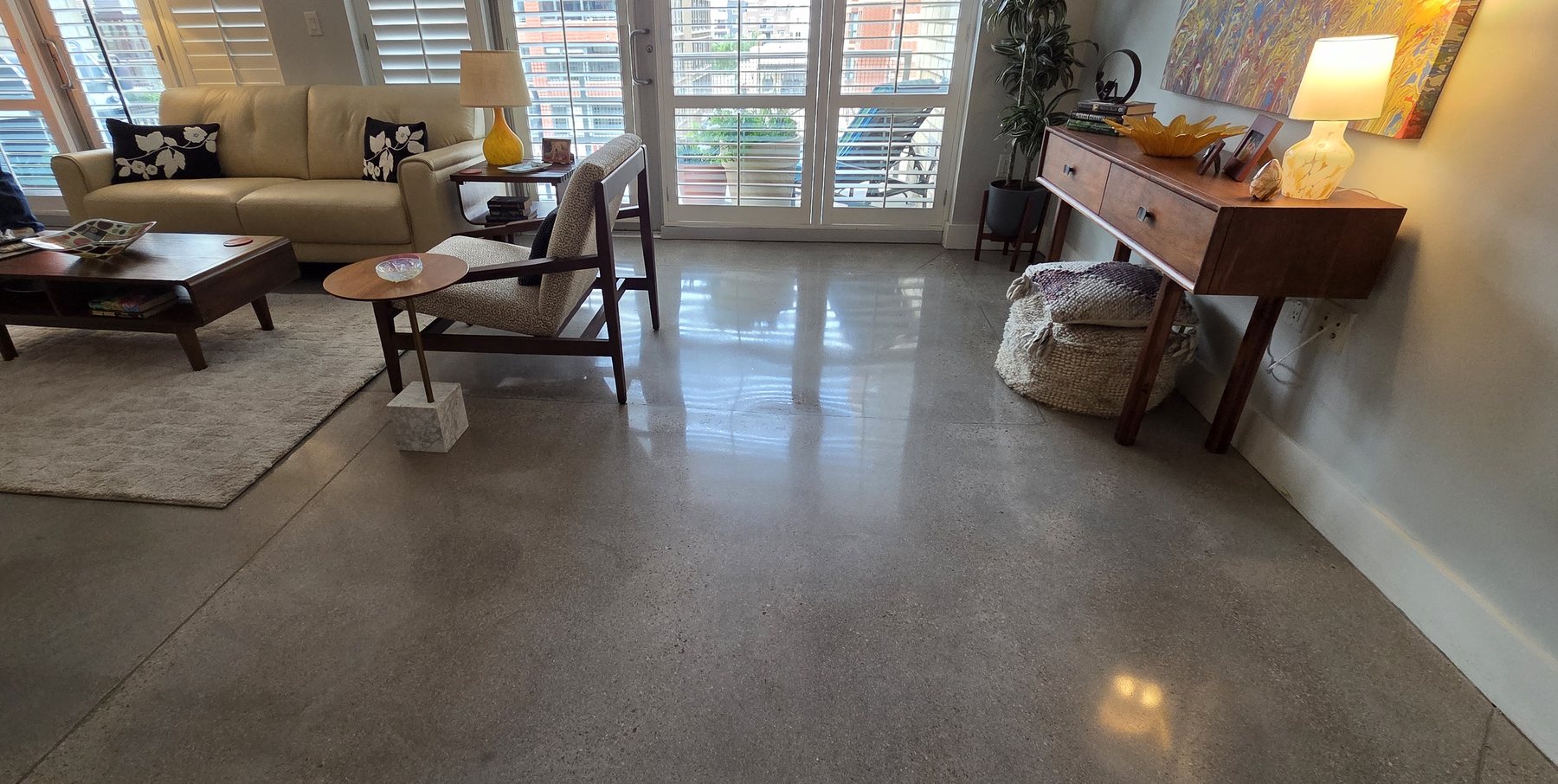
Basements sit against the ground, so moisture is the first question for any floor. Concrete Network says moisture problems should be resolved before any floor treatment goes down, and the ASTM F2170 standard notes that excess moisture in a slab can cause coatings to debond and deteriorate. That's why flooring manufacturers generally require moisture testing before installation.
On our basement floor coatings, every slab is tested, typically with calcium chloride or relative-humidity probe testing. If the readings call for it, a moisture-mitigation primer or vapor-barrier system goes down before the coating. Keep in mind that a test only describes the slab at the time and spots it was taken, as ASTM points out.
One more basement note: Concrete Network, citing the EPA, says sealing a slab is not a substitute for radon testing and mitigation. If you haven't tested for radon, it's worth doing before you finish the space.
Flake vs polished at a glance
| Flake epoxy coating | Polished concrete | |
|---|---|---|
| What it is | A bonded system: pigmented base coat, vinyl flake and a clear topcoat (Everflow data sheet) | The slab itself, ground, densified and polished to the sheen you pick |
| Moisture | Needs testing first, and mitigation when readings call for it | No film for vapor to push off; the floor can breathe (Concrete Network) |
| Slab flaws | Hides stains, patches and minor imperfections well | Cracks can be filled but usually stay somewhat visible |
| Look | Color and a speckled, stone-like texture | Natural concrete, from satin to high gloss |
| Feel underfoot | Chips add subtle texture and slip resistance | Smooth; not slippery when clean and dry |
| Day-to-day care | Sweep or dust-mop, damp-mop | Dust-mop grit, damp-mop with a neutral pH cleaner |
When flake makes more sense
- Working rooms: storage areas, laundry rooms, home gyms and workshops. Concrete Network lists epoxy with flakes as a good fit for recreation areas, utility rooms and workshops.
- A slab with a past: old paint, stains, patches or uneven color. Paint and sealers are ground off first, and the flake hides much of what's left.
- You want color: flake comes in many blends. See our 2026 flake color guide and design ideas.
- You want texture underfoot: the chips give a little grip, and an anti-slip additive can go into the topcoat where it's needed.
When polished concrete makes more sense
- Finished living space: family rooms, media rooms and open lower levels where you want a clean, modern floor. See residential polished concrete.
- A sound slab you like the look of: polishing keeps the character of the original concrete, including some visible crack lines.
- You'd rather not have a coating at all: with nothing on top to wear through, care is mostly dust-mopping and damp-mopping. Our polished concrete care guide covers the routine.
- Rugs and furniture: polished concrete pairs well with area rugs. Concrete Network also suggests rugs or mats as one way to add traction where needed.
Weighing polished concrete for a lower level? Request a free estimate and we'll test the slab and walk you through both options.
A few basement-specific cautions
- Ventilation: basements often have limited airflow. Concrete Network advises avoiding solvent-based products in poorly ventilated spaces, so ask what products will be used.
- Gloss and traction: Concrete Network notes that a high-gloss sealer can reduce traction and that a nonslip additive is the usual fix. Talk about sheen and grip together.
- White powder on the slab: that's usually efflorescence, a sign moisture is moving through the concrete. It needs testing before any coating. Our basement moisture guide explains why.
- Cracks and damage: these get repaired before coating or polishing. See concrete repair.
What to ask at your estimate
- How will you test the slab's moisture, and what do the readings mean for each option?
- If moisture is high, what mitigation would you use under a coating?
- What happens to existing paint, adhesive or patches?
- For flake: what goes into each layer, and can I see real flake samples? (We bring them to the estimate.)
- For polished: what sheen and finish do you recommend, and how will the cracks look afterward?
Every Visionary Floors install includes a 1-year warranty, and our estimates are free and on site. We're insured and work throughout the Denver metro.
Sources
Answers