
Garage Floor Coatings
Full vs Partial Flake Broadcast: What to Compare in Garage Floor Quotes
"Flake floor" can mean a fully covered surface or a light sprinkle of chips. Here's how to tell what each quote actually includes.
Published
The short answer: when two garage quotes both say "flake floor," they may not describe the same thing. A full broadcast covers the base coat with chips until it won't take any more, so no base color shows. A partial broadcast scatters chips at a chosen density, so the base color shows between them. That one choice changes the look, the texture, how much flake goes down and what the base coat has to handle. Ask every contractor to spell it out in writing.
What full and partial broadcast mean
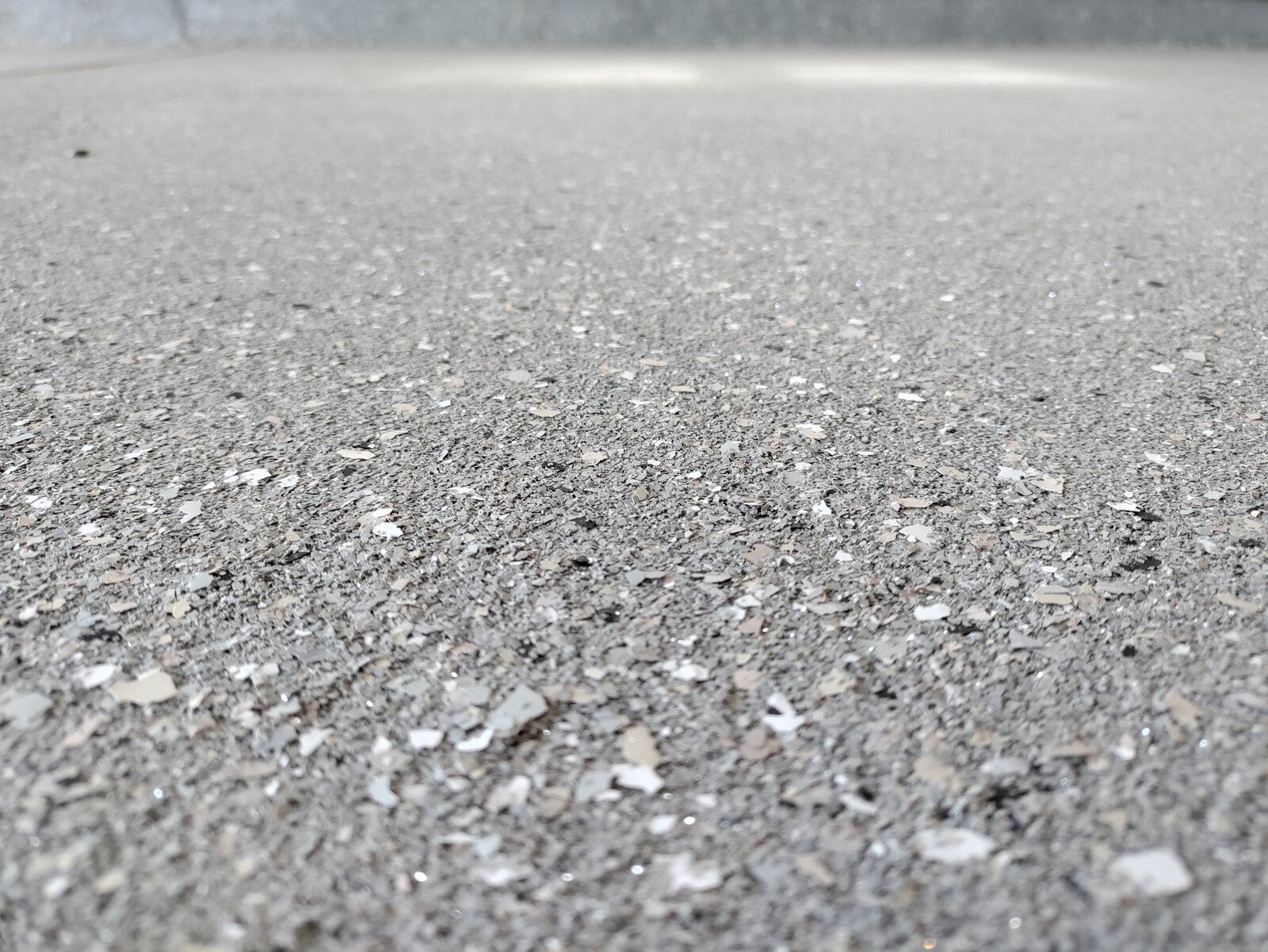
In a typical flake system, a pigmented base coat goes down, vinyl flakes are broadcast into it while it's wet, and a clear topcoat seals everything (Everflow data sheet). PPG describes decorative flake as something that can be hand-sprinkled or broadcast for full coverage, with the final gloss set by the topcoat (PPG Flooring).
The difference is quantity. One flake supplier lists a partial broadcast at roughly 20 to 250 square feet per pound of flake, and a full broadcast to refusal at about 5 to 10 square feet per pound (Exterior Coatings). In plain terms, a full broadcast can use many times more flake, and as that supplier puts it, the more chips used, the less you see the base coat color.
Why the broadcast level matters
- Look: full broadcast gives an even, stone-like speckle. Partial lets the base color lead, for a subtler look.
- Texture and grip: a full broadcast covers the base completely for more texture, grip and imperfection-hiding. That's why it's the popular choice for garages on our flake epoxy floors.
- Base coat exposure: some manufacturers write their instructions around full coverage. Everlast's instructions call for broadcasting to rejection so the epoxy isn't visible, because visible epoxy will yellow (Everlast Epoxy). Concrete Floor Supply notes that base coats are meant to be completely covered and recommends a base coat that can handle UV exposure for a partial system.
- Topcoat: the clear topcoat has to wrap and seal the chips. On partial floors it also protects the exposed base, so the topcoat product matters even more.
Line items to compare on every quote
| Line item | What to look for |
|---|---|
| Surface prep | Diamond grinding, not acid etching, and how cracks and spalls will be repaired |
| Base coat | Product type and color, and whether it can handle UV exposure if any of it will show |
| Broadcast | Full or partial in writing, plus flake size and the blend name |
| Topcoat | Product type (for example, polyaspartic), whether it's UV-stable and how many coats |
| Texture | Whether an anti-slip additive is included and where |
| Edges and joints | How cracks, control joints and the edges along walls are handled |
| Warranty | What it covers and for how long, in writing |
If one quote is much lower, the broadcast level and topcoat are the first places to look. The FTC recommends getting multiple written estimates that describe the work and materials, not automatically choosing the lowest bid, and asking for an explanation when estimates differ a lot.
Comparing flake garage options? Request a free estimate and we'll bring real flake samples to your slab so you can compare looks in person.
Light, medium or heavy: ask to see it
Suppliers often show light, medium and heavy densities, but those words describe a look, not a measured standard. Exterior Coatings suggests ordering a small sample if you're unsure. A sample board or real chips on your slab beats a photo on a phone screen, especially with Colorado garage light changing through the day.
How we build flake garage floors
For most Colorado garages we diamond-grind the slab, repair cracks and spalls, build a pigmented flake epoxy base and seal it with a clear, UV-stable polyaspartic topcoat. Full broadcast is the popular choice for garages because it adds grip and hides dust, salt and tire marks; partial is available when you want more base color to show. See polyaspartic garage floors for the full system, and our UV-stable topcoat guide for why the top layer matters at altitude.
Every install includes a 1-year warranty, our estimates are free and on site, and we're insured. For a broader hiring checklist, read how to choose a residential epoxy contractor.
Sources
- Exterior Coatings: Create-A-Blend Custom Flakes (coverage and density)
- Concrete Floor Supply: Epoxy Flake Calculator and Broadcast Notes
- Everlast Epoxy: Pro Floor Installation Instructions
- Everflow: Vinyl Flake System Data Sheet
- PPG Flooring: Decorative Flake Product Data
- FTC Consumer Advice: How To Avoid a Home Improvement Scam
Answers