
Garage Floor Coatings
Are Flake Garage Floors Slippery? Traction Options for Colorado Garages
Flake adds some texture on its own. For snowmelt, slush and oil, traction is tuned in the topcoat, and it's best decided before installation.
Published
The short answer: a flake floor isn't especially slippery when it's clean and dry, because the chips give the surface a subtle texture. But any smooth, glossy floor gets slicker with snowmelt, slush or oil on it, and Colorado garages see plenty of all three. Extra traction usually comes from the topcoat, where an aggregate such as aluminum oxide is added. It's best decided before installation, with a sample in hand.
Why Colorado garages get slick
From November through spring, cars bring snow, slush and road-salt brine into the garage, and it melts into puddles. Add drips of oil or coolant and the walk from the car to the house door can get slippery on almost any finish. Our winter garage floor maintenance guide covers keeping meltwater under control.
Where traction comes from
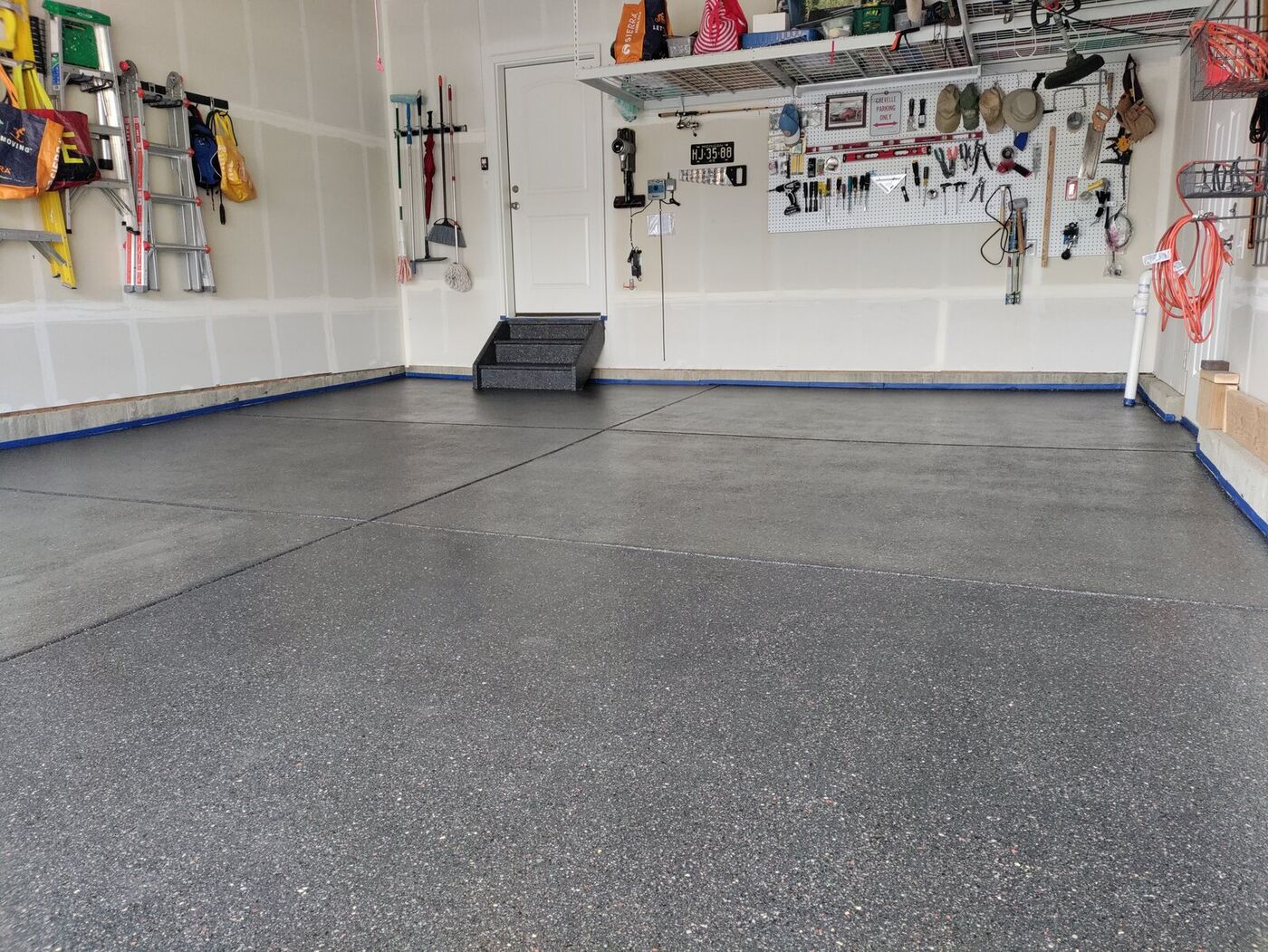
- The flake itself: chips create a speckled, stone-like surface with a subtle texture that adds slip resistance. A full broadcast covers the base completely for the most texture. See full vs partial flake.
- The topcoat texture: coating makers note that topcoats can be modified for different texture, traction and gloss or matte levels (Everflow data sheet).
- Aluminum oxide aggregate: a very hard grit (9 on the Mohs scale) sold as a non-skid additive for epoxy, polyaspartic and polyurethane topcoats. Westcoat's spec lists coarser grits that are broadcast and back-rolled into the topcoat and a fine grit that can be mixed in (Westcoat CA-33). Everlast's installation instructions recommend hand-broadcasting aluminum oxide into the wet topcoat for additional slip resistance (Everlast Epoxy).
- DIY kits work the same way: even retail anti-skid additives are aluminum oxide based, and Rust-Oleum's instructions say to mix it into the final coat only (Rust-Oleum).
The trade-offs to talk through
More grit means more grip, but it also changes the floor. Westcoat notes that aluminum oxide can alter the sheen and gloss, recommends a mockup and says the applicator and the customer decide the texture together. So this is a choice to make on purpose:
- How much texture? Ask to feel a sample before you decide, not after the topcoat is down.
- Where? Some homeowners want extra grip mainly where they walk, such as the path from the car to the door and any steps.
- Look: added grit can tone down a high gloss. Decide which matters more to you.
- Get it in writing: put the texture choice in your quote so there are no surprises.
Planning a flake garage floor? Request a free estimate and we'll bring real flake samples and talk through texture options with you.
Everyday habits that help
- Squeegee or mop up meltwater rather than letting it pool.
- Wipe up oil, coolant and other spills quickly.
- Use a mat at the house door so wet shoes don't track water inside.
- Concrete Network's general advice for smooth concrete floors applies here too: keep the surface free of oil, grease and standing water, and use mats where needed (Concrete Network).
How we handle traction
Our flake garage floors start with diamond-ground concrete and any needed crack or spall repair, then a pigmented base coat, a broadcast of vinyl flake and a clear, UV-stable polyaspartic topcoat. The flake adds slip resistance and hides winter grime, and an anti-slip aggregate can be added to the topcoat where you need more grip. Learn more on our polyaspartic garage floors and flake epoxy pages, or read the best garage floor coating for Colorado winters.
Every install includes a 1-year warranty, estimates are free and on site, and we're insured.
Sources
Answers