
Residential Guide
Polished Concrete Floors for Homes: A 2026 Guide for Denver Lofts and Modern Builds
Why more Colorado homeowners are choosing polished concrete, where it works in a house, what it costs, and what it feels like to live on.
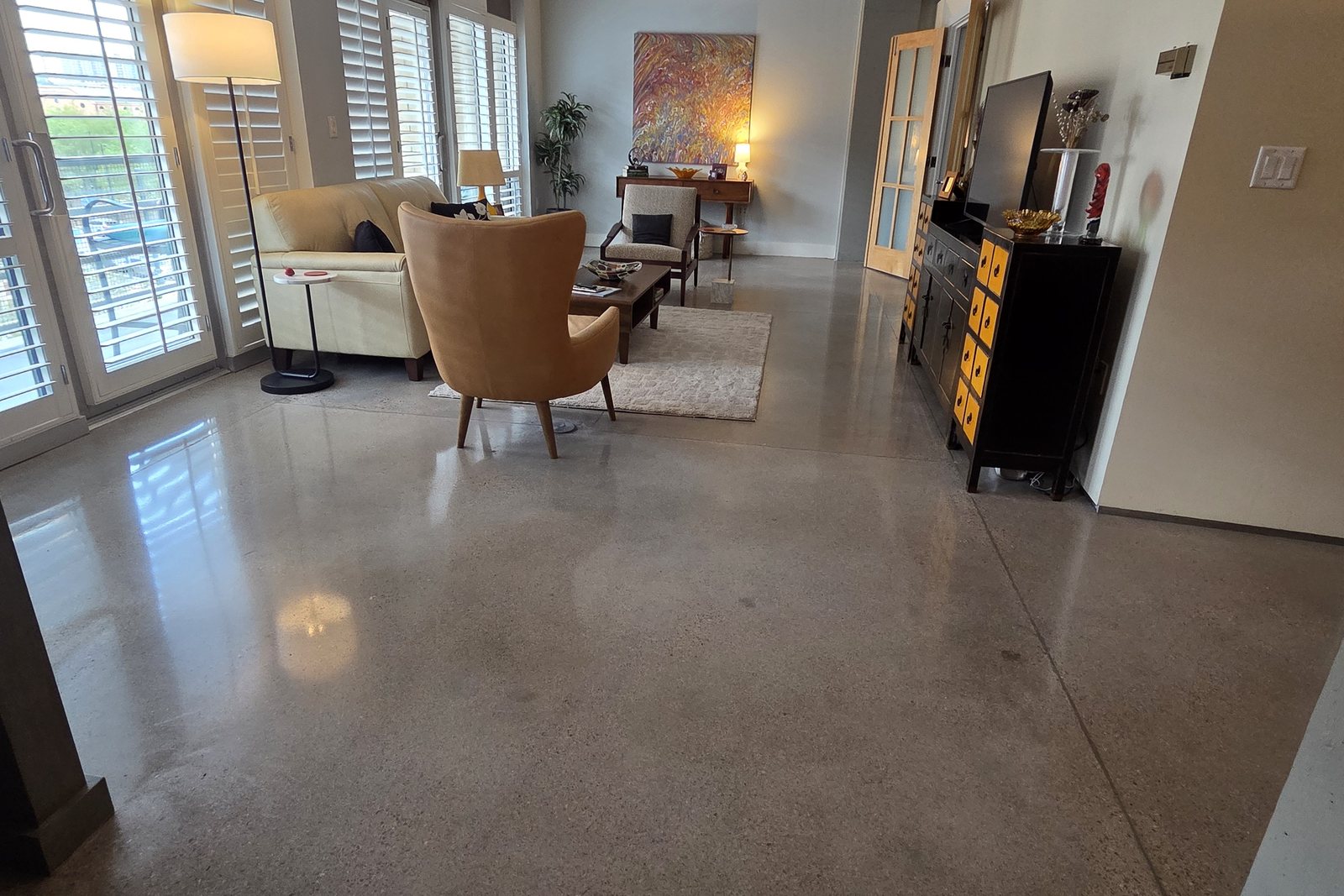
The short answer: polished concrete is one of the most durable, lowest-maintenance floors you can put in a home, as long as the house has a sound concrete slab. Crews diamond-grind the existing slab, harden it with a densifier, and polish it to the sheen you want. Because there's no coating or plank to wear out, a well-kept polished floor can outlast every other surface in the house.
Why polished concrete is trending in homes in 2026
Designers keep describing 2026 interiors as "warm minimalism": natural materials, fewer seams, and finishes that age well. Polished concrete fits that brief better than almost any other floor. Homeowners are also coming to it for practical reasons:
- It doesn't get replaced. Carpet and many plank floors are replaced every 10–20 years. A polished slab is the floor itself, so upkeep is occasional maintenance and nothing more.
- It's easy to keep clean. There are no fibers or grout lines to trap dust, pet hair, or dander, and a dust mop handles most days.
- It uses what you already own. Polishing refines the existing slab, so you aren't buying and installing a new flooring material or sending an old one to the landfill later.
- It works with radiant heat. Concrete's thermal mass pairs well with in-floor heating, which suits Colorado winters.
Where polished concrete works in a home
You need a structural or slab-on-grade concrete floor. Common Front Range candidates:
- Lofts and condos. Many Denver lofts in LoDo, RiNo, and the Highlands sit on structural concrete slabs that are ready for polishing once the old carpet or tile comes up.
- Basements. Polishing turns a plain basement slab into a finished floor without adding height at door thresholds.
- New builds and additions. Planning polish before the pour, including mix, finishing, and joint layout, gives the best-looking result.
- Home offices, studios, and ADUs. These are high-use rooms where durability and easy cleaning matter.
Wood-framed upper floors can't be polished. For garages we usually recommend a flake epoxy system instead, because it hides tire marks and resists road salt better.
Choosing your look: sheen and aggregate
Two decisions shape the whole floor: how much of the stone in the concrete is revealed, and how reflective the surface is. (Our polished concrete page explains each aggregate exposure class in detail.)
| Choice | What it looks like | Best for |
|---|---|---|
| Cream (Class A) | Smooth and uniform, little stone showing | Minimalist, modern interiors |
| Salt & pepper (Class B) | Fine specks of sand and small aggregate | Lofts and living areas; hides everyday dust well |
| Medium / full aggregate (Class C–D) | Visible natural stone, terrazzo-like | Statement spaces and entries |
| Satin sheen | Soft, low-glare glow | Bedrooms and rooms with lots of sun |
| Semi-gloss to high gloss | Crisp reflections of light and windows | Living rooms, kitchens, open plans |
What it's like to live on
Polished concrete is hard, like tile or stone. That's why it holds up so well, and it also means dropped glassware will break. Most homeowners anchor seating areas with area rugs. Slip resistance is better than people expect: properly finished polished concrete meets the ANSI A137.1 wet dynamic coefficient of friction (DCOF) minimum of 0.42. The floor doesn't feel cold for long in sunny rooms or over radiant heat.
Cost and timeline
Residential polished concrete generally runs about $5–$12 per square foot installed. Where you land depends on slab condition, how much crack or patch repair is needed, the aggregate class, and the final gloss. Most home projects take about 3 days. Furniture has to be cleared from the work area, and professional equipment uses dust extraction to keep the house clean. For a side-by-side with coatings, see polished concrete vs epoxy cost.
Related guides
Frequently Asked Questions
Thinking about polished concrete at home?
We'll check your slab, show you gloss and aggregate options in person, and give you a clear quote. Free on-site estimates across the Denver metro.
Get a Free Estimate(720) 742-6691