
Residential Polished Concrete
Polished Concrete vs Grind and Seal: What's the Difference for Your Home?
Both start with a diamond grinder. The difference is whether the shine comes from the concrete or from a sealer on top.
Published
The short answer: with polished concrete, the shine comes from the concrete itself. The slab is ground, honed and polished with bonded diamond abrasives and hardened with a densifier. With grind and seal, the slab is ground and then a sealer is applied on top, and that sealer supplies the sheen. The Concrete Polishing Council's glossary says a floor finished with a film-forming coating doesn't meet its definition of polished concrete (ASCC).
Where the shine comes from
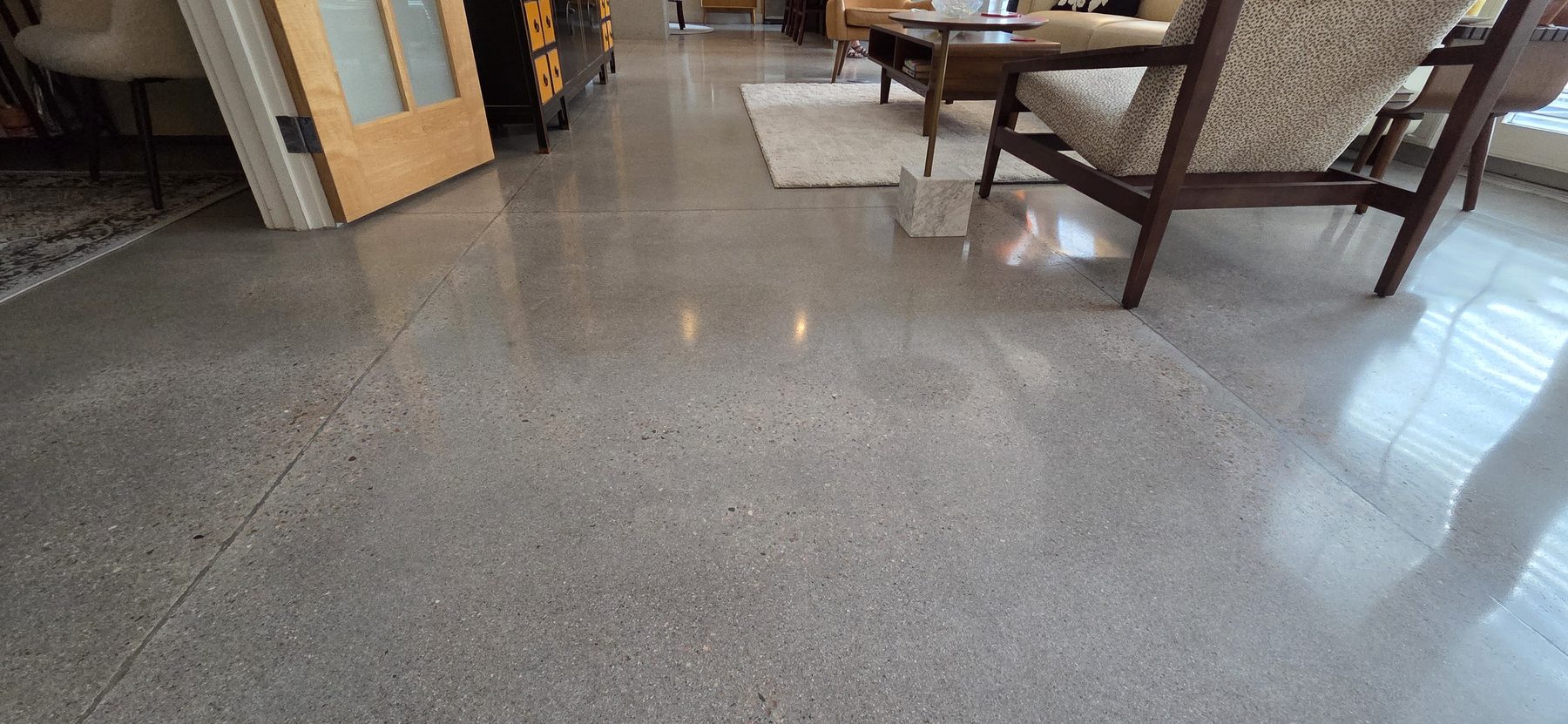
The American Society of Concrete Contractors' polishing glossary defines bonded abrasive polished concrete as the multi-step operation of mechanically grinding, honing and polishing a floor with bonded abrasives, refining each cut to reach a specified gloss. A densifier reacts in the surface of the concrete to produce additional calcium silicate hydrate, the compound that gives concrete its strength. The same glossary calls a floor with a film-forming coating "surface coated concrete" and notes that its durability depends on the quality of the coating, the traffic and the maintenance.
| Polished concrete | Grind and seal | |
|---|---|---|
| How it's made | Progressive diamond grinding, honing and polishing, plus a densifier | Grinding, optional patching and stain or dye, then a sealer or seal system (Super-Krete) |
| Where the sheen comes from | The refined, densified concrete | The sealer on top |
| What takes the wear | The hardened slab surface | The sealer film |
| Look | Natural concrete with no film on top; aggregate exposure can range from cream to full stone | Can reach a higher gloss than most polished floors, or a satin or matte finish; can be stained for color |
| Day-to-day care | Dust-mop and damp-mop with a neutral cleaner | Depends on the sealer; follow the maker's care guidance |
Neither is automatically wrong. Super-Krete, a coatings manufacturer that makes products for both, says sealed concrete can better protect against stains and oils and can take a skid-resistant additive. It credits polished concrete with superior scratch resistance and low maintenance, and notes that a polished floor is breathable and lets vapor pass through.
Why the label matters when you compare quotes
Two quotes can both say "polished" and describe different floors. The Concrete Polishing Council recommends judging a polished floor by its refinement, measured before any penetrating, semi-penetrating or topical sealer goes on. It notes that many stain or gloss-enhancing sealers can cover up scratches left by improper processing and can raise the gloss reading.
Questions worth asking any installer:
- Will the shine come from polishing the concrete, or from a sealer or coating on top?
- Will a densifier be used, and at what point in the process?
- What finish is the final step: a penetrating guard, or a film-forming sealer?
- What does upkeep look like for that finish in my house?
- How much aggregate will show, and can I see what my slab is likely to look like first?
What about the guard on a polished floor?
A guard doesn't turn a polished floor into a sealed one. The ASCC glossary describes impregnating stain protection as a non-film-forming, penetrating sealer made to be applied to densified and polished concrete. That's different from a sealer that forms the wear surface. On our floors, an optional guard or conditioner goes on at the end of the polish, and a professional burnish and re-guard every few years keeps the sheen bright. See our polished concrete care guide.
Which fits which room?
- Living areas, lofts and main floors on a slab: polished concrete keeps the natural concrete look with no film to scuff or peel. See residential polished concrete.
- Basements: both polished concrete and coatings can work on a sound basement slab. Compare options in flake vs polished concrete for basements.
- Garages: a flake coating system is usually the better fit for hot tires, salt and grip. See flake epoxy garage floors.
- Strong color or heavy chemical exposure: if your slab is damaged, or you need specific colors, heavy chemical resistance or maximum slip resistance, an epoxy or flake system may be the better call. See basement floor coatings.
How we polish a residential slab
We assess the slab during the free on-site estimate, looking at cracks, patches, toppings, old adhesives and moisture, and tell you honestly how the finished floor is likely to look. Then we diamond-grind in stages, harden the surface with a lithium or sodium silicate densifier, and polish to the sheen you pick, from soft satin to high gloss. Aggregate exposure runs from Class A (cream) to Class D (full aggregate). Our polished concrete page shows how each level looks. Pulling up old flooring first? Read polishing the concrete under carpet or tile.
Estimates are free and on site, every install includes a 1-year warranty, and we're insured. We serve homes across the Denver metro and the Front Range. Request a free polished concrete estimate.
Sources
Answers