To keep epoxy or polished concrete floors looking new: dust mop or sweep regularly, damp mop with a pH-neutral cleaner, wipe spills promptly, and use walk-off mats and furniture pads. Avoid acidic or citrus cleaners, abrasive pads, and harsh degreasers, which dull the finish. That simple routine — plus an occasional professional refresh — is all most floors need to last 15–20 years.
One of the best things about epoxy and polished concrete is how little upkeep they need. But "low-maintenance" isn't "no-maintenance," and a few good habits (and a couple of things to avoid) make the difference between a floor that looks new for two decades and one that dulls early.
01The simple daily / weekly routine
- Dust mop or soft-broom regularly. Grit is abrasive — sweeping it up is the single most valuable thing you can do, especially in a gritty Colorado garage.
- Damp mop as needed with warm water and a pH-neutral cleaner.
- Wipe spills promptly — oil, chemicals, and deicers included.
02What to clean with
Stick to a pH-neutral floor cleaner (or a mild dish-soap-and-water solution) and a microfiber or soft mop. For garages, a hose-down or gentle pressure rinse works well on flake floors. That's really all a healthy floor needs.
Products & habits to avoid
- Acidic or citrus cleaners and vinegar — they can etch polished concrete and dull sealers over time.
- Abrasive pads, steel wool, or scouring powders — they scratch the gloss.
- Harsh degreasers and solvents used routinely — fine for an occasional tough spot, not for regular mopping.
- Letting deicers and road salt sit over winter — rinse them off (see our Colorado climate guide).
Not sure which floor fits your space?
Our Colorado crews will walk your slab and give you honest options — free.
Book a Free On-Site Estimate03Protecting the finish
- Walk-off mats at entries catch grit and deicers before they reach the floor.
- Felt pads under furniture and plywood or mats under jack stands and heavy equipment prevent point-load scratches and gouges.
- Don't drag sharp metal, toolboxes, or appliances across the surface — lift or use a dolly with soft wheels.
- Use a mat under vehicles that leak, and clean drips promptly.
04Long-term care differences
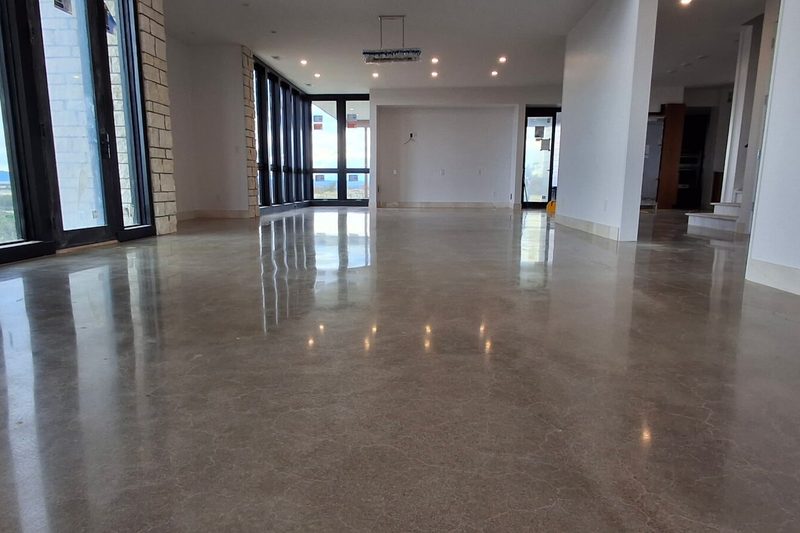
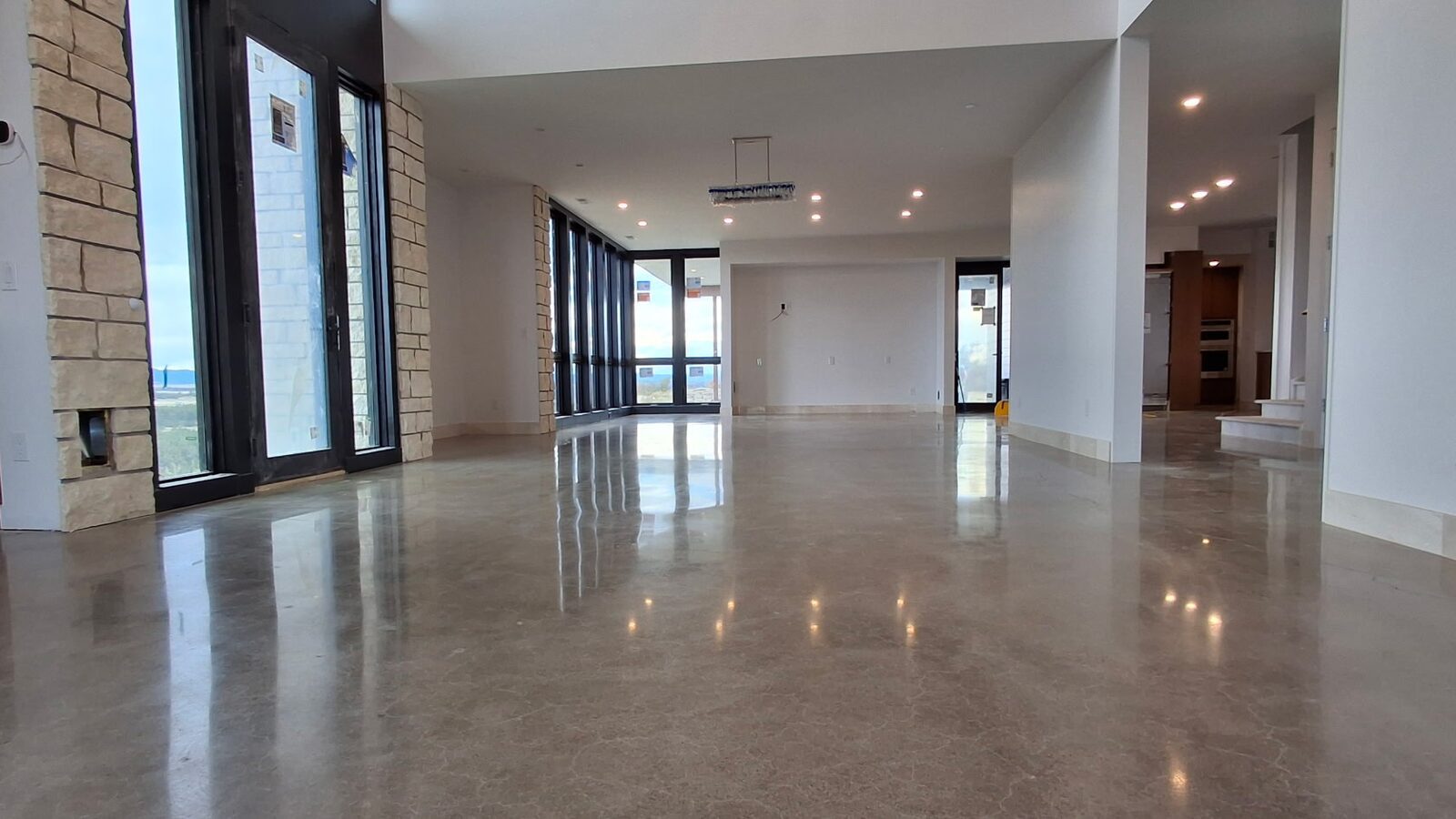
Polished concrete: occasionally a professional will burnish the surface or reapply a guard/conditioner to restore sheen and stain resistance in high-traffic zones. No stripping or waxing cycles required.
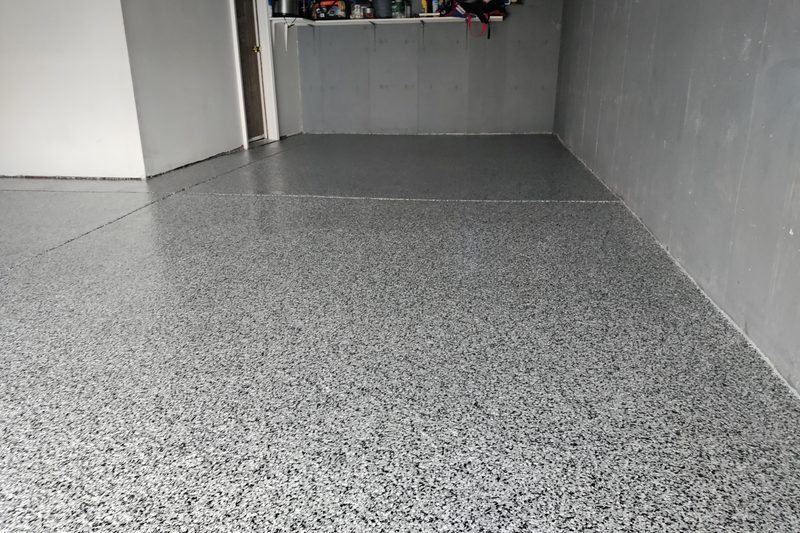
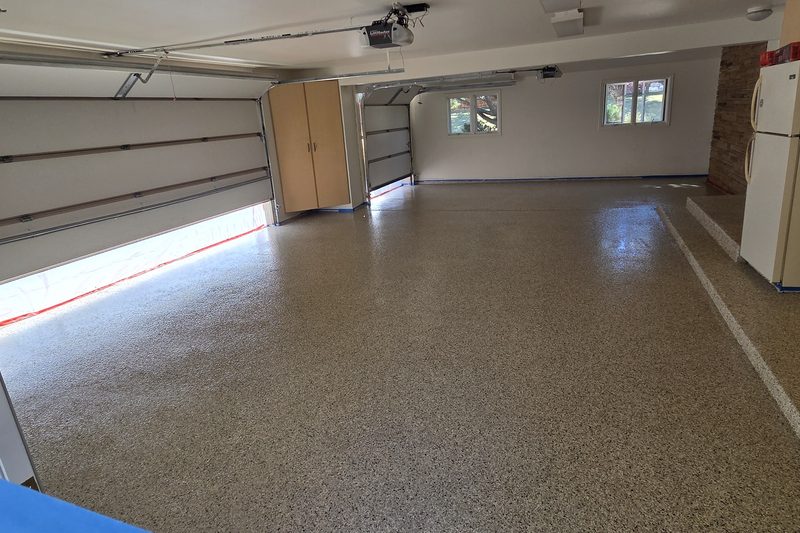
Epoxy & flake: extremely low-maintenance day to day. Every several years, high-traffic floors may benefit from a fresh topcoat to renew gloss and UV protection — a quick job compared with a full reinstall, and a great way to hit the top of the 15–20 year lifespan range.
05When to call a pro
If you notice peeling, blistering, chalking, or worn-through spots, routine cleaning won't fix it — that's a recoat or repair. Our team can refresh a tired floor or restore a damaged one. For a maintenance refresh or assessment, reach out any time.
Key Takeaways
- Dust mop often, damp mop with a pH-neutral cleaner, and wipe spills promptly.
- Avoid acidic/citrus cleaners, abrasive pads, and routine harsh degreasers.
- Use walk-off mats and furniture pads, and don't drag heavy or sharp items.
- An occasional professional topcoat or burnish keeps floors near new for 15–20 years.