
Commercial Floors
Auto Shop Floor Coatings in Denver: What Holds Up in a Service Bay?
A zone-by-zone guide for shop owners, dealership facility managers and fleet managers choosing a floor for service bays in the Denver metro.
Published
The short answer: for working service bays, most shops choose a chemical-resistant epoxy or urethane system over a mechanically prepped slab, with a tough topcoat and some texture for traction. Polished concrete suits showrooms and parts areas. In Colorado, plan for mag chloride slush and cold slabs at the overhead doors.
A shop floor takes more abuse than almost any other commercial floor, and the right system depends on the zone. This guide covers what a Denver service bay deals with, which coatings fit, and what to sort out before install day. For an overview of the systems we use, see auto dealership and service bay flooring.
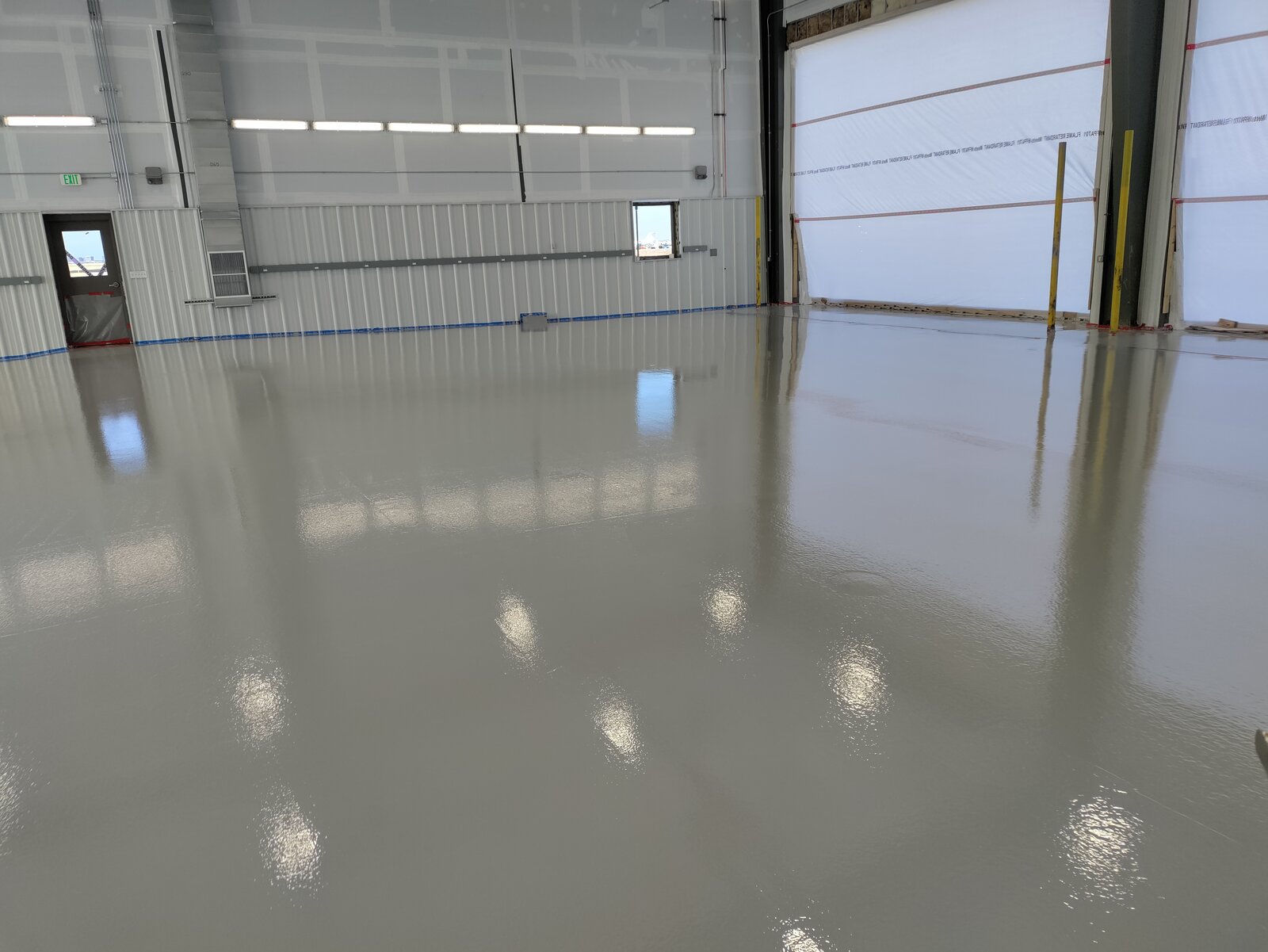
What does a Denver service bay floor deal with?
Start with the list of what lands on it:
- Fluids: motor oil, brake fluid, transmission fluid, coolant, fuel and parts-cleaning solvents.
- Heat and rubber: warm tires parked straight off the road. See hot tire pickup for why thin coatings lift.
- Impact and point loads: dropped tools and parts, jack stands, floor jacks and rolling toolboxes.
- Winter brine: customer cars drip snowmelt and de-icer slush all season. CDOT uses magnesium chloride on state highways, and the concrete industry treats magnesium-based salts as aggressive to concrete. Read what mag chloride does to concrete for the sources.
- Cold at the doors: bay doors open all day in January, so the slab near the doors runs colder than the rest of the shop.
Is epoxy a good choice for an auto shop floor?
Yes, when it's the right system and the slab is prepped properly. For service bays we install chemical-resistant epoxy and urethane systems that handle oil, grease, solvents and constant vehicle traffic far better than standard coatings or bare concrete. The coating seals the slab, so spills stay on top where they can be cleaned up instead of soaking in.
Prep is what makes it last. Every slab we coat is diamond-ground or shot-blasted, cracks and spalls are repaired first, and moisture is tested before anything goes down. Older shop slabs can hold soaked-in oil and old patches, so this step matters even more. See crack and spall repair before coating and why installers widen cracks before coating.
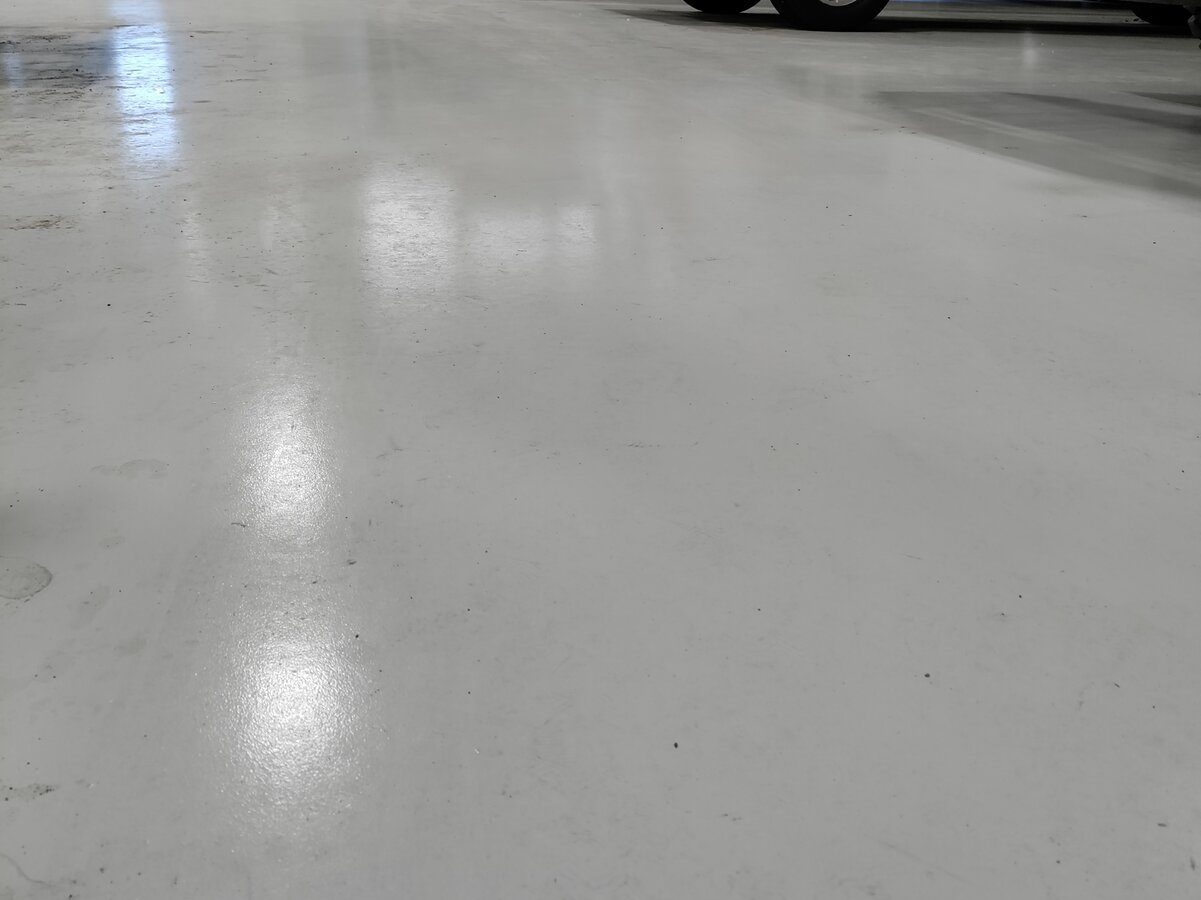
Which topcoat makes sense for a shop?
The topcoat is the wear layer that takes the tires, the fluids and the cleaning. Polyaspartic and urethane topcoats are common over an epoxy base, and which one fits depends on the chemicals, traffic and sun exposure in your bays. We've covered the trade-offs in epoxy vs polyaspartic in Colorado, and our commercial epoxy and urethane systems page lists what we install. Whatever you choose, ask for the topcoat's chemical-resistance data for the fluids you use most.
What are the downsides of epoxy in a shop?
Epoxy isn't foolproof. A smooth, glossy coating can get slick with oil or water on it unless texture is built in. Thin coatings over weak prep can peel under hot tires. Not every topcoat handles every solvent, which is why the data sheet matters. And a coating that's already failing can't be fixed by coating over it; it has to be ground off and the slab re-prepped. Each of these is a spec and prep question, so settle them before install.
Is polished concrete OK for a repair shop?
In the right zones, yes. Polished concrete for showrooms, customer lounges and parts rooms looks sharp, handles foot and cart traffic and needs no recoating cycle on a sound slab. In working bays it's a tougher fit: polished concrete is the slab itself, so oil, brake fluid and coolant can stain it if they sit. That's why many shops coat the bays and polish the customer side.
Why isn't floor paint the same as a floor coating?
Floor paint is a single thin film of color. In a working bay, that film takes the tires, fluids and dropped tools directly, and it's only as good as the prep under it; thin films are the coatings most prone to hot-tire peeling. A coating system builds several layers, a base and a tough topcoat, bonded to a diamond-ground or shot-blasted slab. If you're comparing the two, see garage floor paint vs sealer vs flake coating.
How do you keep a shop floor from getting slippery?
Build texture into the bays. Aggregate broadcast into the topcoat gives shoes grip when the floor is wet or oily, and the grit can be heavier in the bays and wash area than in walkways. Then keep up with cleanup: OSHA expects workplace floors to be kept clean, as dry as feasible, and free of hazards such as spills, snow and ice (OSHA 1910.22). Use absorbent on spills, squeegee meltwater toward drains or doors, and use cleaners that suit the coating. More in slip-resistant coatings.
What about lifts, jack stands and floor drains?
Lifts: follow the lift manufacturer's installation instructions. The Automotive Lift Institute's installation standard, ANSI/ALI ALIS, covers planning items such as concrete work and foundations, and ALI notes you should always refer to the lift manufacturer's instructions for your specific lift (ALI). Tell us at the estimate whether lifts are going in, coming out or staying, so the coating can be sequenced around them.
Jack stands and toolboxes: they put a lot of weight on small contact points. A full-build system over a well-prepped slab handles shop use far better than a thin film. Tell us what equipment rolls and sits on the floor so the system matches it.
Drains: we don't do drain or plumbing work. If drains are being added, moved or repaired, have your plumber or GC finish that work first so the coating can be planned around the finished drains.
Can you coat the shop without shutting down?
Usually. We can phase the floor bay by bay or zone by zone, and schedule nights, weekends or closed days so the rest of the shop keeps working. How soon each zone can take traffic depends on the system and the slab temperature, so we set the phasing with you at the estimate rather than promising a number up front.
Showroom, lounge and parts room
The customer side of a dealership or shop is a different floor. Polished concrete or decorative flake epoxy suits showrooms and lounges where the floor is part of the first impression, and polished concrete works well in parts rooms with cart traffic. See showroom and retail floors. Typical projects on our auto and medical flooring page include dealership showrooms and customer lounges; service bays, express lanes and parts departments; and fleet maintenance facilities.
Planning a shop floor in the Denver metro?
Visionary Floors installs chemical-resistant shop and service bay floors, polished concrete and decorative systems for Colorado businesses. We're fully insured, bring 10+ years of floor experience and work from our shop at 6121 Washington St, Unit J, Denver. See our commercial floors, then book a free on-site estimate. We'll walk the bays, showroom and parts room and recommend a system for each zone.
Sources
Answers