
Garage Floor Coatings
Is a Polyaspartic Topcoat Right for Your Front Range Garage?
A short decision guide for Denver, Boulder, Fort Collins and Colorado Springs garages — when polyaspartic fits, and when plain epoxy is enough.
Published
Is a polyaspartic topcoat right for my Front Range garage? For most Front Range garages, yes. A polyaspartic topcoat is UV-stable, flexible and resists hot tires and chemicals, which fits garages with sun through an open door, winter deicer brine and freeze-thaw. Visionary Floors usually seals a flake epoxy base with it. Start with our page on polyaspartic garage floors.
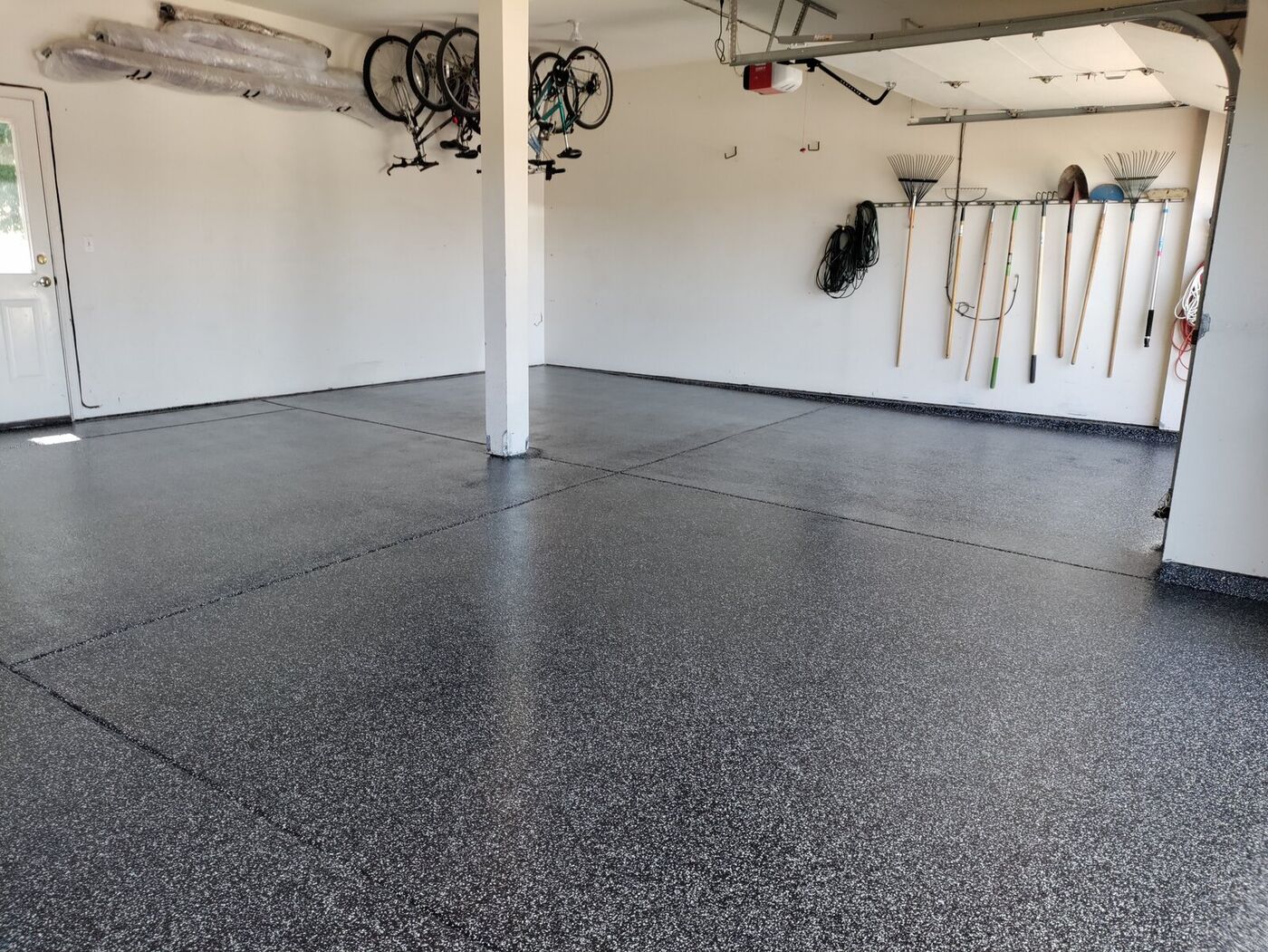
What does a polyaspartic topcoat actually do?
It is the clear wear layer over a flake epoxy base. Polyaspartic coatings date to Covestro (then Bayer MaterialScience) in the early 1990s and were developed as a fast-curing, lightfast topcoat for concrete. For how we build the system, see polyaspartic garage floors.
Is it a good fit if your garage door is open on sunny days?
Yes, because polyaspartic is UV-stable and holds its color. UV is stronger at altitude: about 10% per 1,000 m (WHO) or about 6% per km (EPA), and Denver sits about a mile up. For the deeper take, read why UV-stable topcoats matter in Colorado.
Is it a good fit if you track in deicer brine all winter?
A sealed, non-porous floor keeps brine on top so it can be squeegeed out instead of soaking into bare concrete. See mag chloride and your garage floor and winter garage floor care.
Is it a good fit for a cold slab or a winter install?
Polyaspartics can be applied below 50 °F. Cooler slabs slow the cure, and we confirm the windows on install day. For winter scheduling and slab temperature, read coating a garage floor in a Colorado winter and polyaspartic cure time in Colorado.
Is it a good fit if your car brings home hot tires?
Polyaspartic has strong resistance to hot-tire pickup, which is a common failure mode on lesser coatings after a summer drive. More in hot tires and garage epoxy.
Does polyaspartic crack?
As a wear layer, polyaspartic stays flexible and moves with freeze-thaw better than a rigid epoxy film alone. Existing cracks and spalls still need repair before coating; see crack and spall repair and polyaspartic garage floors.
When is plain epoxy, or a different topcoat, enough?
Neither epoxy nor polyaspartic wins at everything: epoxy builds the base, and the topcoat choice matters most where there is sun and traffic. A fully enclosed, low-light space makes UV less critical, so a different wear layer can be enough. Compare epoxy vs polyaspartic in Colorado and polyaspartic vs urethane topcoats.
Full polyaspartic or polyaspartic over an epoxy flake base?
Visionary Floors builds a flake epoxy base under a polyaspartic topcoat because each polyaspartic coat is thinner and the base adds body and adhesion. All-polyaspartic systems exist too; the right build depends on your slab and how you use the garage. For traction questions on a flake finish, see are flake garage floors slippery.
Quick decision checklist
- Yes if sun hits the floor through an open door or window.
- Yes if you track in winter deicer brine.
- Yes if you need a cold-weather-capable topcoat on a cool slab.
- Yes if hot-tire pickup has been a problem before.
- Maybe not if the space is fully enclosed, low-light and low-traffic — ask at the estimate.
Ready to see if polyaspartic fits your garage?
Request a free on-site estimate. We bring flake samples so you can see real chips in your light, and we measure and check the slab at your home. Shop: 6121 Washington St, Unit J, Denver. Front Range areas we serve include Denver, Boulder, Fort Collins, Colorado Springs and all service areas. For the system itself, go back to polyaspartic garage floors.
Sources
Answers