
Garage Floor Coatings
6 Signs Your Colorado Garage Floor Is Ready for a Coating
Dust, stains, flaking and peeling all point to the same fix, but each one changes what has to happen before the coating goes down.
Published
The short answer: a garage floor is usually ready for a coating when bare concrete starts working against you: it sheds dust, holds oil stains, flakes where salty meltwater sits, or an old paint or DIY kit is peeling. A coating can solve all of these, but only after the cause is handled in prep. We diamond-grind every slab and repair cracks and spalls before any coating goes down.
1. You keep sweeping up concrete dust
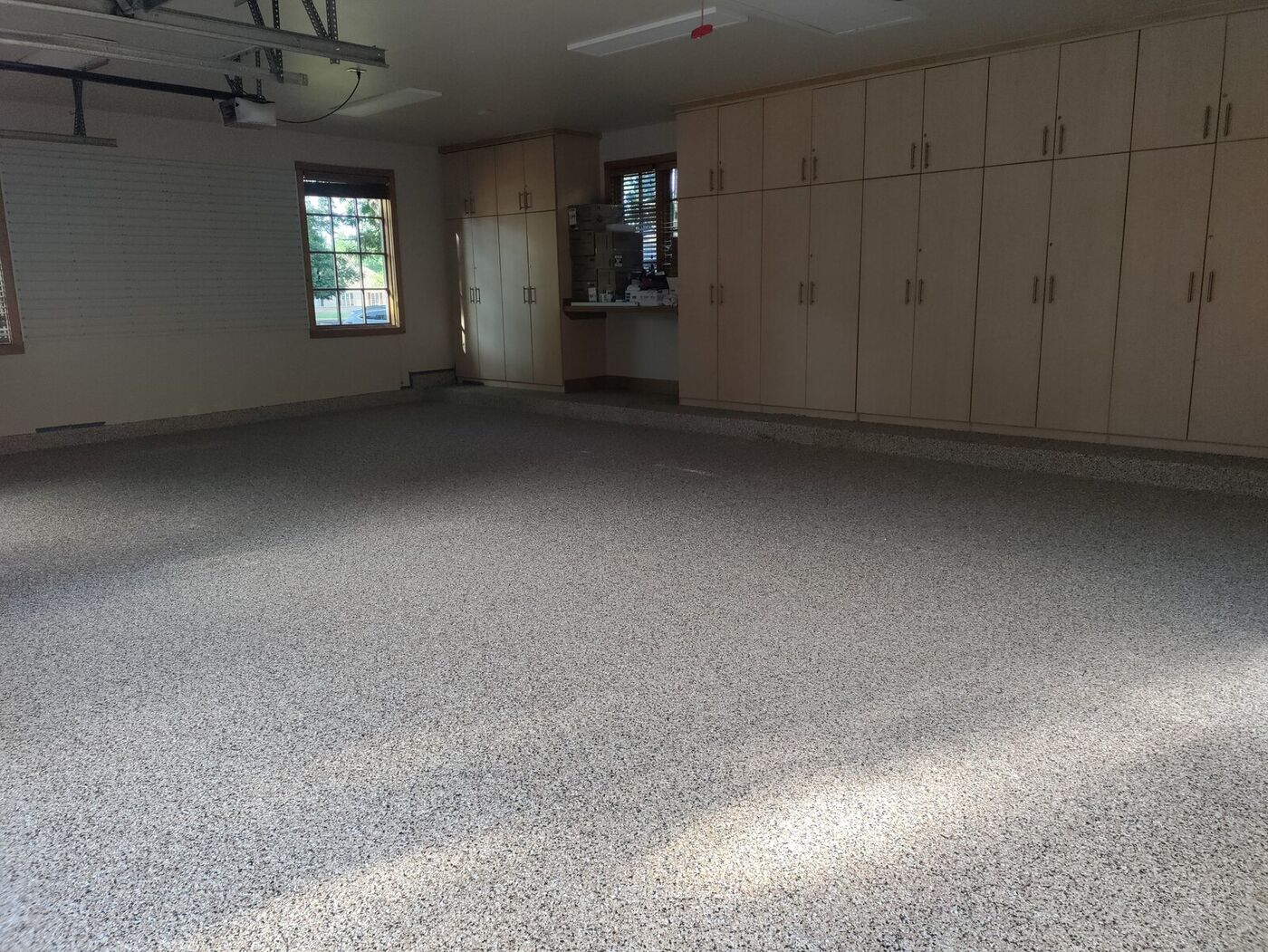
Fine gray powder that comes back no matter how often you sweep is called dusting. The National Ready Mixed Concrete Association (CIP 1) explains that a floor dusts because its wearing surface is weak, and that a dusting surface powders under traffic and can be scratched with a nail. Its repair guidance includes chemical hardeners and, if dusting persists, a coating such as an epoxy sealer. In severe cases, it recommends grinding down to durable concrete.
For a coating, the weak top layer has to come off first. That's why we diamond-grind every slab, with no acid etch shortcuts. See concrete grinding vs acid etching.
2. Oil and fluid stains won't come out
Bare concrete is porous, so drips from the car soak in. Concrete Network says it's important to remove oil before sealing or resurfacing concrete, because oil that isn't removed will eventually seep back through to the surface and ruin the new treatment. During prep, oil and tire marks are removed, and deep stains may need to be ground out. Once the floor is coated, spills wipe up from the seamless surface.
3. The surface is flaking or pitting where you park
Flaking near the parking spot or the door is often scaling. NRMCA's CIP 2 defines scaling as local flaking or peeling of the finished surface from freeze-thaw cycles, and explains that de-icing chemicals make it worse. In Colorado, a lot of that de-icer rides in on the car. Read what Colorado's road de-icer does to your garage floor. Pitting and spalls are repaired during prep rather than coated over. See concrete slab, crack and spall repair.
4. Cracks are collecting dirt and meltwater
Open cracks and chipped joint edges trap grit and let salty meltwater in. Cracks are repaired during prep, and a multi-tone flake surface helps camouflage minor slab cracks afterward. We look at every crack during the estimate and tell you what it needs. For more warning signs in the slab itself, see 7 signs your concrete floor needs repair.
5. Paint or a DIY kit is peeling
Peeling, bubbling or flaking usually traces back to weak prep (acid etching instead of grinding), thin coatings, or no moisture testing. Oil left in the concrete can also push a new treatment off (Concrete Network). A failing coating has to come off before a new system goes down. See how to remove an old epoxy floor and garage floor paint vs sealer vs flake coating.
6. Your garage is more than a parking spot
If the garage has become a workshop, a home gym or the main way into the house, bare concrete shows every tire mark and tracks dust inside. A flake floor's speckled surface hides dust, salt and tire marks between cleanings, and a full broadcast adds grip underfoot. Read are flake garage floors slippery? for traction options.
What gets fixed first
| Sign | Likely cause | What happens in prep |
|---|---|---|
| Concrete dust | A weak wearing surface (NRMCA CIP 1) | Diamond grinding opens sound concrete the coating can grip |
| Oil stains | Oil soaked into porous concrete (Concrete Network) | Oil and tire marks removed; deep stains may need to be ground out |
| Flaking or pitting | Freeze-thaw and de-icers (NRMCA CIP 2) | Pitting and spalls repaired before coating |
| Cracks | Slab movement, freeze-thaw and wear | Cracks repaired during prep, not coated over |
| Peeling paint or kit | A coating that never bonded | Failed coating removed, slab diamond-ground |
Moisture is the one sign you can't see. We evaluate moisture before any coating goes down. On a brand-new slab, see coating a new-build garage floor.
Ready to take a look?
For most Colorado garages we recommend a flake epoxy base sealed with a UV-stable polyaspartic topcoat. At a free on-site estimate we'll check the slab, bring real flake samples and explain what your floor needs. Every install includes a 1-year warranty, and we're insured. We serve homeowners across the Denver metro and the Front Range, from Fort Collins to Colorado Springs.
Sources
Answers